Author: Anthony Llewellyn

  • US Doctors Australia. There Are Two Main Options for Work.

    US Doctors Australia. There Are Two Main Options for Work.

    Whilst the number of enquiries for help I have had from US doctors is slightly less than say, for example, UK doctors, the prospects for US doctors working in Australia are pretty much on a par. There are a couple of main options for US doctors to work in Australia.

    So the answer to the question can US doctors work in Australia is yes. Of course, no doctor coming from another country is guaranteed to be able to work in Australia. But because the US medical training system is recognised by the Medical Board of Australia as being on a par with that of Australia, US doctors tend to have good success with either becoming generally registered through what is called the competent authority pathway or being recognised as a specialist through what is called the specialist pathway. In 2017 (the latest year we have figures for) 20 out of 23 US specialists were deemed comparable to work in Australia.

    So the prospects for working in Australia as a US doctors are good. But its important to give a little bit more detail. As I have highlighted there are two main options for getting registered so we will talk about these first and then go into some other common questions.

    The Competent Authority Pathway. The Trainee Option For US Doctors Australia.

    If you are a trainee doctor in the US, i.e. a Resident who has not yet achieved specialty status. Then you are looking at the competent authority pathway for working in Australia.

    The competent authority pathway assigns preferential status to any doctor who has completed their primary medical training in one of the following countries: the United Kingdom, Canada, the United States and the Republic of Ireland.

    The rationale for this is largely an historical one and based on the premise that all these jurisdictions have similar approaches to medical school training and similar standards.

    New Zealand is not included in the list above as its medical schools are accredited by the same body as Australian medical schools, the Australian Medical Council. So doctors from New Zealand in Australia are generally treated identically as those from Australia.

    If you are an international medical graduate and you have achieved general registration in the United States, Canada or the United Kingdom (but not the Republic of Ireland) you are also eligible for the competent authority pathway.

    What are the steps involved for the competent authority pathway.

    You can find out more about the competent authority pathway on the Medical Board of Australia website.

    The key steps are as follows:

    1. Securing an employment offer
    2. Applying to the Australian Medical Council for primary source verification
    3. Applying for registration to the Medical Board of Australia
    4. Completing 12 months supervised practice
    5. Applying again to the Medical Board of Australia for general registration.

    Eligibility for Competent Authority

    You can do a “self-assessment of your eligibility for the competent authority pathway on the Medical Board of Australia website here.

    The essential requirements are:

    Successful completion of the United States Medical Licensing Examination Step 1, Step 2 and Step 3 since 1992

    AND

    Successful completion of a minimum of two years of graduate medical education within a residency program accredited by the Accreditation Council of Graduate Medical Education.

    OR

    Successful completion of the National Board of Medical Examiners (NBME) licensing examinations Part I, II and III before 1992

    AND

    Successful completion of a minimum of two years of graduate medical education within a residency program accredited by the Accreditation Council of Graduate Medical Education.

    This means doctors who have trained in US accredited medical schools outside of the United States sometimes find it difficult to come to Australia via the Competent Authority Pathway.

    See if you qualify for a free coaching call to explore your options working in Australia

    [fluentform id=”8″]

    What types of jobs can I apply for as a US Trainee?

    You can pretty much apply for any sort of trainee job. There are often a number of postgraduate years 2 or 3 general jobs on offer, which are generally termed Resident Medical Officer in most States and Territories but may also be called House Officer or Hospital Medical Officer in some places.

    Above these posts normally come the specialty training positions (Australia is a bit different from the US in that there is a period between medical school and specialty training) which are generally referred to as Registrar positions. But you might also see advertised as Senior House Officer or Trainee or Advanced Trainee.

    One key thing to look out for is that most of these jobs will not accept an overseas applicant.

    A key thing to look for is the phrase “eligible for registration” in the selection criteria.

    It is very important to try and secure an employment offer. Whilst you can apply to the Australian Medical Council to check your primary medical degree at any stage. You won’t be able to gain registration until you have an offer of employment. This is because the Medical Board needs to see a supervision plan from your employer.

    Outside of general practice (which is what we call family medicine in Australia), the majority of employment opportunities for trainee doctors occur within public hospitals. So your best places for finding suitable job postings are on the State and Territory health department recruitment sites. We have a listing of these on our international doctors’ resource page.

    What Type of Supervision Will I Need Or Get?

    The Medical Board of Australia is very vigilant around supervision standards for IMG doctors. What sort of supervision you receive will depend on a number of factors, including:

    • your qualifications
    • your previous experience, especially in the type of position for which you have applied
    • whether you have practiced recently and the scope of your recent practice
    • the requirements of the position including the type of skills required for the position
    • the position itself, including the level of risk, the location of the hospital or practice and the availability of supports (supervisors)
    • the seniority of the position, for hospital position

    In general you will either be approved for Level 1 or Level 2 Supervision. There are 4 Levels and the higher up you go the less direct oversight you require.

    Level 1 Supervision requires your supervisor (or alternative supervisor) to be present in the hospital or practice with you at all times and you must consult with them about all patients. Remote supervision (for e.g. by telephone) is not permitted. Level 1 is generally recommended when you are very junior yourself or entering a junior role which you are not very familiar with. In Australian major public hospitals there are many layers of other doctors who you can get supervision from so Level 1 is not too much of an issue in these circumstances.

    Level 2 Supervision, which is what most US trainees approved to work in Australia will normally be approved for is a step up from Level 1 Supervision. Supervision must primarily be in person but your supervisor can leave you to do work on your own and you can discuss by phone. You should discuss with them on a regular (daily) basis what you have been doing with patients. But do not need to discuss every case.

    What happens after I commence my position?

    Once you are approved for registration and you have your visa issues sorted you will be able to commence work. Generally your employer helps you out with all these things. You will be working under what is called “provisional registration” by the Medical Board of Australia. Generally all you need to do for this 12 months is to pay attention, show that you can learn and grow and get regular feedback from your supervisors. Your supervisors will need to complete regular reports for the Medical Board of Australia and it is your responsibility, not theirs to see that they are completed and returned on time. If all the reports go well you will be able to be recommended at the end of the 12 months for general registration.

    You will probably be starting to look for another job or negotiating an extension around this time. With general registration you may be able to apply for a skilled visa, as well as be looking at applying for permanent residency.

    Permanent residency is crucial for applying for most specialty training programs. See below.

    The Specialist Pathway. The Option For Specialists US Doctors Australia.

    For US specialists your option for working in Australia is what is called the Specialist Pathway.

    Once again this starts with becoming verified as a doctor with the Australian Medical Council and should again coincide with an active search for a position.

    You may be lucky enough to be in a targeted specialty area where you might successfully be approved for what is called an Area of Need Position, in which case the employer or recruitment agent will provide you a lot of support and will likely pick up the costs of being assessed.

    For most International Doctor specialists however these days you will be approaching the college directly to be assessed. This is not something to be trifled with. The paperwork requirements and the cost (generally around $5,000 AUD and more) is considerable.

    On the plus side, the colleges all have reasonably helpful information on their websites, including the application forms and a little bit about their criteria for assessment.

    I have saved you the trouble of finding those pages by putting them on our International Doctors resource page here.

    The other issue for US specialists is that there are more than 2x the number of specialties in the US than in Australia. So working out which specialty goes into which Australian college can also be confusing. Fortunately, I have you covered on that as well here.

    After you go through your specialist assessment you are given an outcome. In the majority of cases for US specialists, you are deemed either partially comparable or substantially comparable. Rarely are you deemed not to be comparable by the college. If you are this means you cannot directly become a specialist in Australia. You will have to go through the competent authority route and re-enter training.

    Can you enter training in Australia if you are a US doctor?

    To undertake formal specialty training in Australia you need to be accepted into a college training program. In all circumstances, you will need general registration and in most also at least permanent residency.

    There is an alternative but time limited pathway for US doctors who are just seeking a short term experience in Australia to add to their training in the US. This is called the Short Term Training in a Medical Specialty Pathway. To do this you must be offered a training position first and you must have either completed you training in the US or be less than two years from completion. So this is a program mainly for early career specialists or advanced trainees.

    You go through the same steps with the AMC as per the competent authority pathway to gain registration. You will not, however, be able to apply for specialist assessment as part of this pathway. But if you gain general registration you may then be able to apply for another position and then apply for specialist assessment.

    Can you do your internship in Australia as a US doctor?

    Basically no. Internship in Australia is a provisional year that only applies to medical graduates from medical schools in Australia and New Zealand. There is a “loophole” which only applies to doctors who have not been able to complete an internship or equivalent in their own country. But the Medical Board warns that this is not a great option and is only granted in limited cases. You are far better off starting your ACGME residency program in the US and applying after 2 years or more.

    How many US doctors are working in Australia?

    There no one public data source to tell us how many US doctors are currently working in Australia.

    From data collected by the Australia Government we know that for 2017 (latest available year):

    • 40 applications were made for the competent authority pathway by US doctors with 30 granted provisional registration through that pathway
    • 29 applications were made for specialist assessment, 3 of which were deemed not comparable, 12 partially comparable and 8 substantially comparable, with a further 6 withdrawing their application
    • 12 US doctors were recommended for specialist recognition with 4 not being recommended

    Are Osteopathic Doctors recognised in Australia?

    Yes. The degree Doctor of Osteopathic Medicine (DO USA) is a medical qualification that is recognised for the purposes of medical registration by many international registration authorities.
    The Medical Board of Australia (the Board) has agreed to accept the DO USA as a primary medical qualification for the purposes of medical registration provided that the DO USA was awarded by a medical school which has been accredited by the Commission on Osteopathic College Accreditation of the American Osteopathic Association and recognised by both the Australian Medical Council and the World Directory of Medical Schools.

    How hard is it to become a specialist in Australia if you are from the US?

    Specialist doctors from the United States are not automatically granted specialist recognition. As you can see from above in 2017 there were 29 applications made for specialist assessment to the Australian colleges by US doctors and of these only 20 were deemed to be comparable. In the previous year of 2016 4 applications were deemed to be not comparable, 11 partially comparable and 8 substantially comparable.

    US doctors tend to get a reasonably favourable outcome in comparison to doctors from most other countries. However, many are being seen as partially comparable only which involves more work and effort to then get to the level of specialist recognition.

    If we compare these results to another competent authority country, the United Kingdom then in 2017, 332 UK doctors were deemed substantially comparable, 43 partially comparable and only 5 not comparable.

    Are there any particular specialties that are easier to apply for?

    The majority of specialties have some vacancies and will provide opportunities for US and other IMG doctors from time to time. This is particularly the case if you are prepared to go outside of the major cities. Some areas of medicine are more popular and so finding jobs in areas such as most surgical fields, as well as other fields such as cardiology can be quite difficult.

    On the other end of the spectrum general practice, psychiatry and most parts of critical care medicine are often always looking for doctors.

    Are there any other options for working as a doctor in Australia?

    Some doctors just want to come to Australia for a limited period of time as an opportunity to train in another country.

    As we have highlighted above there is an alternative but time-limited pathway for US doctors who are just seeking a short term experience in Australia to add to their training in the US. This is called the Short Term Training in a Medical Specialty Pathway. To do this you must be offered a training position first and you must have either completed you training in the US or be less than two years from completion. So this is a program mainly for early career specialists or advanced trainees.

    We hope that you found this summary about how US doctors can work in Australia useful. If you have any questions or queries or just want to relate your experience. Please feel free to leave a comment below.


  • Yes. Medical Interns Get Paid In Australia – Medical Intern Pay

    Yes. Medical Interns Get Paid In Australia – Medical Intern Pay

    A question we get asked reasonably frequently is about medical intern pay and specifically whether medical interns get paid in Australia. Often this comes from doctors working in other countries. We think the main confusion occurs around the concept of an intern in a medical setting and an intern in a corporate setting.

    In relation to the question of whether medical interns get paid in Australia. The answer is an unequivocal yes. Medical Interns are paid a salary of between $68,000 AUD and $79,000 AUD base salary per annum for full-time work, depending on which State or Territory of Australia they are in. The majority of interns are employed on a full-time basis and they can often earn a little be more due to working shifts and overtime.

    So the question then arises as to why medical interns are paid and other interns are not? As well as whether there are other situations where a doctor might be employed in a non-paid capacity. Feel free to read on further where we answer these questions and discuss the topic of medical intern pay.

    Medical Intern Pay

    Why Are Medical Interns Paid and Other Interns in the Corporate Sector Normally Not paid?

    According to the online etymology dictionary, the word intern comes from the French word “interner“, meaning send to the interior or confine, which itself derives from the Latin word “internus“, meaning within or internal.

    the French word “interne” means ‘assistant doctor’ and the word means one working under supervision as part of professional training”

    So it seems that the concept of the medical intern or doctor intern came first. This, in turn, stems from the concept of an apprenticeship, which arose in the middle ages under the guild system. Agricultural methods and technology had become more advanced, requiring fewer workers in the fields. So people started leaving the farm to take up trades in their early to mid-teens.

    Apprentices would pay a guild master to teach them the trade. Apprentices typically lived with the master for a decade, if not longer, and couldn’t marry or earn wages during the apprenticeship. At the end of the apprenticeship, the apprentice became a member of the guild and a “journeyman”, which meant he could earn his own wages.

    Medical Interns Were Probably Not Paid At Some Point.

    Therefore it’s also likely at some point even medical interns were unpaid. The apprenticeship model in medicine evolved into the concept of a medical internship year probably sometime in the early 1900s. And intern doctors became doctors who were recent graduates of medical schools who were unlicensed but able to work under supervision strictly in hospitals.

    So at some point, medical intern pay was introduced for these doctors. You generally needed to complete your intern year to be able to go out on your own and start a practice. But many doctors stayed on longer and these trainees were often housed by the hospitals. This is where the term resident comes from.

    For some time now. Since the end of the second world war, at least we have had medical intern pay. This is a reasonable proposition as they have already undertaken a large degree of unpaid higher education (generally more than any other profession) to get to this point and they now contribute significantly to the operation of many hospitals.

    According to Taylor Research group, corporate intern programs originated in the United States in the 1960s as both businesses and government agencies saw the merit of providing short term opportunities for prospective future employers to gain some work experience in their summer breaks. However, it has only been in the late 1990s that government and corporate internships have become common in college campuses in the United States and also only in the last couple of decades have they started to become more common in other countries.

    Because these internships are generally shorter and limited in time and focused around providing current students with a work experience opportunity most internships have been offered on a voluntary basis. This is not to say that no corporate internship provides payment or other benefits. In some cases, there may be allowances for things like travel or accommodation or other expenses. And of course, the premise of an internship in the corporate sector is that one receives free on the job training.

    Are there situations where you might not get paid for working as a doctor in Australia?

    There should really be no situation where a doctor performs work in Australia and is not paid for this. Certainly, all true medical internship positions are paid under an Award based system. Which is a set of rules that are commonly applied to a group of employees across a certain industry sector and by which the employer must abide.

    Sometimes the concept of a clinical placement or clinical observership can be confused with a medical internship. These are actually quite different things.

    A clinical placement in medicine in Australia normally occurs as part of the formal requirement for workplace-based experience in a medical school program. Students are assigned to placements under supervision in hospitals, general practices, and other settings.

    A clinical observership is a period of time where a doctor observes another doctor or clinical team in a non-active capacity. The most common reason for this is to permit doctors from other countries to familiarise themselves with the Australian health care system and gain exposure to patients. Most such placements last around 4 to 8 weeks.

    How do I find a Clinical Observership?

    If you are an international medical graduate a clinical observership is not only a great opportunity to gain exposure to the medical system in Australia but it may provide you with an opportunity to make connections with potential future employers. So it’s not surprising then that clinical observerships are highly sought after.

    Most clinical observerships tend to be arranged through personal connections. For example, you may know a senior clinician in a hospital who is able to arrange a clinical observership for you. Some hospitals may offer formal observership programs such as Northern Health in Melbourne, in which case the criteria for gaining an observership is quite high.

    Be aware that the hospital may be using observerships to test out potential employees. So it’s probably best to have some grounding in what sort of things employers look for in medical officers before embarking on an observership.

    Where is the best place for medical Intern pay in Australia?

    In order to work out where the best place to work as a medical intern in Australia is we would need to take a number of factors into consideration including remuneration, career opportunities, work conditions, the desirability of location and cost of living.

    If we are to look just at remuneration then Western Australia is definitely the best place to work in Australia as an intern as the wages for interns in Western Australia are the best in the country.

    Coupled with this Western Australia has some very nice places to live and has recently become a far better prospect for the cost of living, in particular renting and buying a house, since the decline in the mining boom that grossly affected housing prices there.

    Where is the worst place to work for medical Intern pay in Australia?

    If we were to use the same factors that make Western Australia the best place to work in Australia then New South Wales, in particular, Sydney would be easily the worst place to work as a medical intern in Australia. The pay rates for interns in NSW are the worst in the country and it doesn’t get better as you progress as a trainee. And, of course, Sydney is the most expensive city to live in in Australia.

    But it’s not all bad. New South Wales has a lot of training opportunities and Interns in NSW are offered a 2-year contract, whereas Interns in other parts of the country are only given one year. This makes a great difference as it can take the pressure off in your first year because you are not worried about impressing your employer to get another job the following year.

    Related Questions

    Exactly how much can medical interns make from shift-work and overtime?

    Whilst the base salary of an intern in Australia is somewhere between $68,000 and $79,000 AUD it is possible to do considerably better than this. Most interns are required to do a level of overtime and what is called shift work (work outside the normal hours) both of which are paid at a higher level than normal work. For example, most overtime (work in excess of 40 hours) is paid at double time in Australia.

    So you can see that that base salary can improve quite significantly. But of course, it also means you are working longer hours, which may not necessarily be a good thing.

    How much does a Resident Medical Officer earn?

    A Resident Medical Officer is someone who is at least a year more senior than an Intern. In their first year, a Resident Medical Officer will earn considerably more money than an Intern. For example in NSW interns earn a base salary of around $66,000 AUD and first-year residents earn a base salary of around $77,000 AUD.

    Do corporate Interns ever get paid?

    Corporate internships are sometimes paid. Using non-paid employees to do the work of employed workers can get employers into trouble with regulator authorities, particularly in countries like Australia. So generally corporate internships that are of longer duration do tend to get paid.

    Is there somewhere I can find out more information about pay rates for doctors in Australia?

    Interestingly there is no one place to find out about doctor pay rates across the country. We have written a blog post that summarizes the pay rates for interns across Australia here and we hope to have the time to summarize the rest for you. Check back regularly.

  • A Guide to the Specialist Medical Colleges. List and Links Included.

    A Guide to the Specialist Medical Colleges. List and Links Included.

    *This post has been updated to reflect the current statistics for medical practitioners as per the Medical Board of Australia June 2022.

    If you are a doctor from another country entering Australia. Unless that country is a country like the United Kingdom or United States, you are probably a little confused by what the specialist medical colleges are and do. Even trainee doctors in Australia get confused about the medical colleges. 

    Don’t worry we have you covered in this guide. We even give you the list and links to all of the Colleges with a bit of an explanation of what sorts of fields of medicine they cover.

    What are the specialist medical colleges?

    The specialist medical colleges are member based and training organizations that generally cover a certain aspect of specialist medical training in a country.  The colleges developed historically in the English medical system from trade guilds and so are common in countries which developed their medical systems from the English system, for example, United States, Canada and Australia.  The colleges have official status and a license to uphold the medical standards in their area of medicine.  Examples of specialist medical colleges are:

    Whilst colleges and universities both provide postgraduate education.  Colleges generally differ from universities in two main ways:

    1. Colleges apply an apprenticeship model of training, i.e. you work under supervision of an expert in the specialty. Whereas, universities apply other models of learning.  This difference relates back to the time when colleges emerged from a number of other trade guilds.
    2. Once you have completed college training you are generally invited to become a member of the college where your ongoing professional development is served and where you are expected to teach and supervise new trainees. Whereas, once you complete a university degree you may be asked to join the alumni but there is no expectation to take an active role in the university nor teach other new students.

    The specialty medical colleges generally cover 2 components of the medical training continuum.  The first being postgraduate medical education – the training required to become recognized as a specialist.  The second being ongoing or continuing professional development (CPD), which has historically been known as continuing medical education (CME). This is where the colleges act to support and monitor the standards and currency of current specialists.

    A short list of the 16 Australian Specialist Medical Colleges
    (we include the College of Dental Surgeons here):

    Read on further for more details about these colleges and what they do.

    Now that you know what a specialty medical college is.  Let’s talk more about some of the confusing points of colleges.  What types of colleges there are in Australia and importantly how to work out which college is the right college for you.

    Alternative Approaches to Medical Specialty Colleges.

    In other countries and health systems medical specialist training is delivered through universities and other educational institutions and continuing professional development is monitored by regulatory authorities, medical boards and licensing authorities.  When doctors from these countries they can sometimes be confused about what a college is or does.

    Hybrid Models.

    To add further to the confusion in some countries there is overlap between the role of the specialty medical colleges the universities and other medical authorities. Canada and the United States is a good example of this. In these countries much of the postgraduate training is delivered via university programs but overseen by specialty medical colleges.

    In the United Kingdom the role of the colleges as training providers has also shifted in the last decade or so, with the college role in providing training and determining specialist qualification being reduced.

    The Status of the Specialty Medical Colleges in Australia.

    In Australia the specialty medical colleges remain very powerful.  With the possible exception of general practice (which is a specialty by the way) the specialist medical colleges generally have the oversight of and organize much of the specialty training that occurs in this country as well as continue to monitor the continuing professional development of their members (called Fellows).

    What are the Medical Specialty Colleges in Australia?

    Something that should be pointed out at this point is that most (but not all) of the specialty medical colleges in Australia are also the same college for the country of New Zealand.  This has the handy advantage for Fellows of these particular colleges being able to be recognized and work in either jurisdiction.  You will notice most colleges either refer to themselves and the “Australian and New Zealand College of”… or “Australasian College of”, for this reason.

    See below for a full list of the current Medical Specialty Colleges in Australia along with links to their websites.

    On each College home page, there is usually an easily found link in the menu bar for prospective trainees, as well as international specialists looking for information about the specialist assessment process.  We also have direct links to the specialist assessment pages for SIMGs here.

    Our data sources for the table below come from the Colleges themselves as well as the latest available Medical Board data which you can find here, as well as health workforce data, from the Federal Government. You can find the homepage for this data collection here.

    Royal Australasian College of Physicians

    Number of Fellows: 19,673 Fellows (Aus &NZ) – source RACP.

    Specialist Numbers: 12,672 Adult Medicine, 3,621 Paediatrics, 439 Palliative Medicine, 198 Addiction Medicine, 137 Sexual Health, 452 Public Health Medicine, 591 Rehabilitation Medicine, 308 Occupational and Environmental Medicine – source Medical Board Australia.

    Main Post Nominals (FRACP).

    Actual total slightly higher due to other programs offered, some of which are jointly run with other colleges.

    The RACP is one of the biggest Colleges. It also the most complex in terms of training programs. There are about 37 training programs. Fellowship of the RACP covers a range of aspects of specialty medical training, with a focus on Adult Medicine and Paediatrics

    If you are struggling to work out where your field of medicine fits, chances are it fits within the Physicians College.

    In the two main groups of Adult Medicine and Paediatrics and Child Health there are many subspecialties including General Medicine and General Paediatrics as well as things like Cardiology, Infectious Diseases, Geriatrics and Neonatal Care.

    The RACP also covers 3 Chapter Training Programs in Addiction Medicine, Palliative Medicine as well as Sexual Health Medicine which you can enter after doing your Basic Training with the RACP or via training with another college.

    Finally the RACP also provides 3 Faculty Training Programs in Public Health Medicine, Occupational and Environmental Medicine and Rehabilitation Medicine. Again, you can either enter into these after Basic Physician Training or by completing other prerequisites.

    Fun Fact: The RACP even covers Dermatology for New Zealand!

    Royal Australasian College of Surgeons

    Number of Fellows: 6,842 Total. Comprising: 2,362 General Surgeons, 1,779 Orthopaedic Surgeons, 624 ENT Surgeons, 573 Plastic and Reconstructive Surgeons, 568 Urologists, 325 Neurosurgeons, 246 Vascular Surgeons, 239 Cardiothoracic Surgeons, 126 Paediatric Surgeons (Aus & NZ) – source RACS.

    Specialist Numbers: 2,214 General Surgeons, 1,577 Orthopaedic Surgeons, 547 ENT Surgeons, 516 Plastic and Reconstructive Surgeons, 508 Urologists, 292 Neurosurgeons, 256 Vascular Surgeons, 212 Cardiothoracic Surgeons, 106 Paediatric Surgeons – source Medical Board Australia.

    Post Nominals (FRACS).

    Fellowship of the Royal Australasian College of Surgeons is one of the most highly sought after fellowships. Entry into any one of the 9 specialty training programs is highly competitive.

    The subspecialty areas are:
    Cardiothoracic Surgery, General Surgery, Orthopaedic Surgery, Otolaryngology, Head & Neck Surgery, Paediatric Surgery, Plastic & Reconstructive Surgery, Urology, Vascular Surgery, and Neurosurgery.

    specialist medical colleges - the royal australasian college of surgeons
    Outsiede of the Royal Australasian College of Surgeons Building in Melbourne, Australia
    Attribution: Canley, CC BY-SA 4.0 https://creativecommons.org/licenses/by-sa/4.0, via Wikimedia Commons

    Royal Australasian College of General Practitioners

    Number of Members (includes trainees and other non-Fellows): 40000+ – source RACGP.

    The total number of General Practitioners in Australia 34,654 – source Medical Board Australia.

    Post Nominals (FRACGP).

    The RACGP is by far and away the largest College in Australia. It is also one of the few colleges which is not involved in training within New Zealand. However, if you do have the FRACGP, you will receive reciprocal recognition in New Zealand.

    General Practice is recognized as a specialty in Australia. In other countries this specialty may be referred to as Family Medicine, a Family Physician or Primary Care

    Training to be a GP is conducted via a few different pathways. The largest one is the Australian General Practice Training Program, which is separate to the RACGP.

    So the RACGP is a little different to other colleges in that, whilst it still sets training program requirements and conducts examinations, the training itself is done externally to the college.

    The RACGP also provides an alternative training program where with a small amount of additional training you can be recognised as a rural GP (FARGP).

    Royal Australian and New Zealand College of Psychiatrists

    Number of Fellows: 4,678 – source RANZCP.

    Number of Specialists: 4,409 – source Medical Board Australia.

    Post Nominals (FRANZCP).

    The RANZCP is one of the last true generalist specialist colleges in Australia. Its training program runs for 5 years and includes mandatory training in Adult Psychiatry, Consultation-Liaison Psychiatry (General Hospital Psychiatry), Child and Adolescent Psychiatry as well as a range of other types of experiences and assessments.

    Towards the end of training, trainees can elect to undertake Advanced Training in a certain area of Psychiatry, including Child and Adolescent, Consultation-Liaision, Adult Psychiatry, Old Age Psychiatry, Neuropsychiatry, Forensic Psychiatry and Psychotherapy, however all trainees emerge from the program considered competent to work in all fields of the specialty.

    It is expected that the position on generalism in Psychiatry will change in the not too distant future.

    Australian and New Zealand College of Anaesthetists

    Number of Fellows: 6,000 specialist anaesthetists and 460 pain specialists (Aus & NZ) – source ANZCA.

    Specialist Numbers: 5,793 Anaesthetists, 383 Pain Medicine – source Medical Board Australia.

    Post Nominals (FANZCA).

    ANZCA ANZCA is responsible for the training, examination and specialist accreditation of anaesthetists and pain medicine specialists in Australia and New Zealand. In any given year there are about 1500 trainees undergoing training accredited by ANZCA in Australia and New Zealand. The College also has a number of trainees in Singapore, Malaysia and Hong Kong.

    Australian College for Emergency Medicine

    Number of Fellows: 3,850 – source ACEM.

    Specialist Numbers: 3,098 – source Medical Board Australia.

    Post Nominals (FACEM).

    At 35 years ACEM is one of the newer colleges in Australia. It is also one of the first colleges in the world that represented the specialty of emergency medicine that emerged (pardon the pun) in the 1970s from hospital casualty department medicine.

    The Association of Casualty Supervisors of Victorian Hospitals (ACSVH) was the first body in Australia to focus on Emergency Medicine. Its formation followed a 1973 report on the Royal Melbourne Hospital’s Casualty Department and observations of similar facilities in Western Australia, the USA and the United Kingdom.

    Australian College for Rural and Remote Medicine

    Number of Fellows: unavailable.

    The total number of General Practitioners in Australia 34,654 – source Medical Board Australia.

    Post Nominals (FACRRM).

    The Australian College of Rural and Remote Medicine is one of two colleges accredited by the Australian Medical Council (AMC) for setting professional medical standards for training, assessment, certification and continuing professional development in the specialty of general practice. It is the only College in Australia dedicated to rural and remote medicine, and is active in supporting junior doctors and medical students considering a career in rural medicine. ACRRM’s training approach is quite different from most other colleges and based partly around modularised learning. ACRRM Fellows receive full vocational recognition for Medicare General Practice Items and are not just restricted to working rurally, they can practise unsupervised anywhere in Australia.

    As a relatively new and small college ACRRM tends to be particularly welcoming to International Medical Graduates.

    However, the FACRRM has more limited recognition overseas in comparison to the FRACGP.

    Royal Australian and New Zealand College of Obstetricians and Gynaecologists

    Number of Fellows: 2,000+ (Aus & NZ) – source RANZCOG.

    Specialist Numbers: 2,265 – source Medical Board Australia.

    Post Nominals (FRANZCOG).

    RANZCOG is the College that deals with the specialty of womens’ and maternal health.

    RANZCOG has recently recognised 5 subspecialty fields within its specialty area:
    Gynaecological oncology, Maternal-fetal medicine, Reproductive endocrinology and infertility Ultrasound, and Urogynaecology.

    Royal College of Pathologists Australia

    Number of Fellows: unavailable.

    Specialist Numbers: 2,375 – source Medical Board Australia.

    Post Nominals (FRCPA).

    The RCPA represents Pathologists and Senior Scientists (working in medicine) in Australasia. Its mission is to train and support pathologists and to improve the use of pathology testing to achieve better healthcare.

    It is novel as a college in that it trains non-medical professionals as well.

    There is some degree of overlap in training and representation with the RACP. Particularly in relation to the areas of haematology and microbiology. Post fellowship diplomas are also available in anatomical pathology, chemical pathology, clinical pathology, forensic pathology, general pathology, immunopathology and genetic pathology.

    A Faculty of Clinical Forensic Medicine also exists within RCPA.

    Royal Australian and New Zealand College of Radiologists

    Number of Fellows: 3,741 – source RANZCR.

    Specialist Numbers: 2,954 Radiologists, 453 Radiation Oncologists – source Medical Board Australia.

    Post Nominals (FRANZCR).

    RANZCR encompasses two Faculties, the Faculty of Clinical Radiology and the Faculty of Radiation Oncology.

    Many Radiologists carry out radiological investigative techniques and with the pace of medical technology, some are now also delivering treatments.

    College of Intensive Care Medicine

    Number of Fellows: 1000+ (Aus & NZ) – source CICM.

    Specialist Numbers: 1,096 – source Medical Board Australia.

    Post Nominals (FCICM).

    The College of Intensive Care Medicine is the body responsible for intensive care medicine specialist training and education in Australia and New Zealand. The College offers a minimum six-year training program, in both general and paediatric intensive care, with a number of assessments, culminating in the Fellowship of the College of Intensive Care Medicine (FCICM). The College has over 1000 Fellows throughout the world.

    The College of Intensive Care Medicine was established in 2008 and formally took over the responsibility for training and certification of intensive care specialists from the Joint Faculty of Intensive Care Medicine (RACP & ANZCA) on 1st January 2010.

    Australasian College of Dermatology

    Number of Fellows: 621 – source ACD.

    Specialist Numbers: 633 – source Medical Board Australia.

    Post Nominals (FACD).

    The ACD is the peak medical college accredited by the Australian Medical Council for the training and professional development of medical practitioners in the specialty of dermatology.

    Royal Australasian and New Zealand College of Ophthalmologists

    Number of Fellows: unavailable.

    Specialist Numbers: 1,067.

    Post Nominals (FRANZCO).
    The Royal Australian and New Zealand College of Ophthalmologists (RANZCO) is the medical college responsible for the training and professional development of ophthalmologists in Australia and New Zealand.

    Royal Australasian College of Medical Administrators

    Number of Fellows: 503 (Aus, NZ and Hong Kong) – source RACMA.

    Specialist Numbers: 355 – source Medical Board Australia.

    Post Nominals (FRACMA).
    The Royal Australasian College of Medical Administrators (RACMA) is a specialist medical college that provides education, training, knowledge and advice in medical management. Recognised by the Australian and New Zealand Medical Councils, it delivers programs to medical managers and other medical practitioners who are training for or occupying Specialist Leadership or Administration positions. Whilst you generally do not require a Fellowship in Medical Administration to work in a leadership role, RACMA is the only college-based training program where you can become a Fellow in the Speciality of Medical Administration.

    RACMA also has significant options for recognition of prior learning.

    Australasian College of Sport and Exercise Physicians

    Number of Fellows: unavailable.

    Specialist Numbers: 158 – source Medical Board Australia.

    Post Nominals (FACSEP).

    ACSEP is the professional body representing Sport and Exercise Physicians and Sport and Exercise Medicine in Australasia. Sport and Exercise Physicians are committed to excellence in the practice of medicine as it applies to all aspects of physical activity. Safe and effective sporting performance at all levels is a major focus. Alongside this is the increasing recognition of the importance of exercise in the prevention and treatment of common and often serious medical conditions, such as arthritis, heart disease, diabetes and many cancers. The goal of all Sports and Exercise Physicians should be to facilitate all members of the community to enjoy exercise safely to 100 years and beyond, knowing that physical activity provides them with the ‘best buy’ to prevent chronic disease.

    Royal Australasian College of Dental Surgeons

    Number of Fellows: unavailable.

    Specialist Numbers: There are 177 Oral and Maxillofacial Surgeons according to the Medical Board Australia.

    Post Nominals (FRACDS(+/-OMS)).

    The RACDS is over 50 years old and Fellows have been providing a broad range of activities to enhance the professional development of both general and specialist dentists through individually mediated studies, examinations and continued professional development. It is responsible for the RACDS OMS Training Program.

    The OMS Training Program is designed to provide trainees with sufficient theoretical and practical background to meet all current standards available in Oral and Maxillofacial Surgery in Australia and New Zealand.

    Eligibility for this program includes the requirement to have both a medical and a dental degree and full registration in both specialties, as well as a year of general surgical experience. So becoming an OMFS surgeon is possibly the longest specialty training program in Australia!

    How To Work Out Which College Is For You If You Are A Specialist International Doctor?

    If you are from overseas it can sometimes be tough to work out how your particular specialty fits into the Australian system or in fact how your training may differ from what occurs in Australia.

    Here’s an example, in the United States Child and Adolescent Psychiatrists train primarily within the field of child and adolescent psychiatry and probably learn more paediatric medicine than any other form of psychiatry.  Whereas in Australia, you have to start out training in general psychiatry and only at the stage of Advanced Training do you undertake significant periods of study in Child and Adolescent Psychiatry.

    This can have significant issues for child psychiatrists as much of their training won’t stack up against the program in Australia.

    If you are considering working here as a specialist here are a few tips to consider when working out which college fits you:

    1. There may be an obvious first starting point. For example, if your field is within the surgical domain, you are likely (but not always) to be covered by the Royal Australasian College of Surgeons. Exceptions might include Ophthalmic Surgeons and Dental Surgeons.
    2.  If you have worked generally for many years and are considered a specialist in your country. But you do not have a certificate or have not undergone a formal specialty training program or course. You are unlikely to be granted specialist status in Australia.
    3. If you cannot work out where your particular specialty fits and it’s not surgically related it probably fits within the Royal Australasian College of Physicians and their many programs. Or as an alternative, it may be covered by General Practice.
    4. You can actually ask the colleges. They will answer some basic questions before charging you to look at your specialist application.  A question like “this is my subspecialty, do you cover it here?” should be answered free of charge.

    How To Work Out Which College Is For You If You Are An Australian Trainee Doctor?

    • For Australian trainee doctors, there are many opportunities to inform themselves about the various specialty trainee options.  Some of the things that you can do include:
    • making a list of specialties that interest you and maximising your exposure to them in medical school and your early days as a medical graduate by choosing electives wisely and being selective about any choices you have about hospitals and rotations
    • reviewing information on the college websites
    • attending careers sessions
    • talking to actual trainees doing the role (this is a great tip as it gives you a very authentic appreciation of what it’s like to work and train in a particular specialty)

    When considering specialty training it’s important to consider the “80:20” rule.  Many doctors are attracted to certain specialties because of their interests in rare conditions or niches within the specialty.  You may well end up being the one right-ventricular surgeon in Australia.  But you probably won’t and you will have to go through a lot of steps to get there if you do.

    It’s best to consider what’s common about the specialty as both a specialist as well as a trainee:

    • What sorts of patients will you be regularly seeing?
    • What sort of hours will you work?
    • Where will you work?
    • Is research or teaching a regular component of the role or a rarity?

    The classic example is Endocrinology. Whilst there are many fascinating conditions in the field of endocrinology. If you are not interested in looking after at least some people with diabetes mellitus you should probably choose something else.

    Below are the rest. More information about these other colleges coming soon.

    The History of Medical Colleges

    In Europe in the 18th century, unqualified people performed certain restricted medical tasks that other qualified practitioners viewed as quackary. This included procedures, such as “cutting out stone” a (a surgical incision to remove urinary calculi from the bladder) or “couching” (dislodging cloudy cataract lenses using pressure or a surgical instrument and pushing it to the back of the eye) as well as bone setting.

    No one knows for sure but it is possible that medical specialisation started in Paris in the wake of the French Revolution when hospital-based medicine started to coalesce around certain clinical conditions and pathologies that correlated. Doctors started to gain more experience in limited fields, and this expertise was encouraged as it appeared to lead to better health outcomes. According to Geffen. “By 1860, there were more than 66 specialty hospitals in London alone. The rise of the hospital system promoted the elite consultant, and specialisation flourished.”

    Related Questions.

    How many specialties are there in Australia?

    The answer to this question is a little more complex than one might think. We have already discovered that there are 15 colleges. 16 if we include the Dental College, which we really should as they include the oral-maxillofacial surgeons.  But we know that there are then a range of subspecialties and other programs housed within some of the colleges, in particular the RACP and RACS.  The Australian Medical Council in its role of accrediting specialty training programs (see below) currently recognises 25 programs.  This number captures all the colleges, as well as the additional programs that the RACP offer and two different programs for Intensive Care Medicine.  The former the Joint Faculty for Intensive Care Medicine is now a defunct program and will be removed at some point in lieu of the more recently established College of Intensive Care Medicine.  This is an example of how college evolve over time and new colleges arise. See below.
    At last count according to the Medical Board of Australia there were around 64 recognised subspecialties in Australia.
    But this doesn’t even compare to the United States, where the Association of American Medical Colleges lists 131 specialties.

    How many specialists are there?

    According to the Medical Board of Australia. As of June 2022, there were 78,887 medical specialists registered, covering a total of 84,602 specialty field recognitions. The latter is larger than the first as some specialists have dual specialist endorsements. For example, an Anaesthetist may be endorsed for both anaesthetics and pain medicine.

    Is General Practice a Specialty?

    In one word. Yes.

    What was the First Specialty COllege?

    Founded in 1518 by a Royal Charter from King Henry VIII, the Royal College of Physicians of London is the oldest medical college in England. It continues to play a pivotal role in raising standards and shaping public health today.

    According to the Royal College of Physicians

    “In the 1500s medical practice in England was poorly regulated. Many ‘physicians’ were working with no formal training or knowledge, and almost certainly killed as many patients as they cured. The leading physicians of the early 16th century wanted the power to grant licenses to those with actual qualifications and to punish unqualified practitioners and those engaging in malpractice.

    A small group of physicians led by the scholar Thomas Linacre petitioned King Henry VIII to establish a college of physicians on 23 September 1518. An Act of Parliament extended its powers from London to the whole of England in 1523.

    Originally called the College of Physicians or the King’s College of Physicians, it only gradually became known as the ‘Royal College of Physicians of London’ during the 17th century. It was only with the restoration of the monarchy, that the RCP started referring to itself consistently as ‘royal’. But from the very beginning its members found their patients from the highest levels of society.

    Royal College of Physicians “Our History”

    What was the Second College?

    The second College in England was the “Company of Barber-Surgeons”, which was established in 1540. It formed out of a trade guild and a London Livery Company that apprenticed and examined trainees within the City of London. As the name suggests, what we now refer to as the medical specialty of surgery arose out of those tradespeople who earned their living from performing haircuts and beard trims and shaves. This makes sense as these tradespeople worked with sharp objects that were good for cutting things other than hair. So its likely that some developed skills at other useful forms of cutting. Initially the barber members of the guild were the most senior members but in time the surgeons became more respected and sought to break away and establish their own identity.

    Who checks on the Colleges?

    The Australian Medical Council is the body that checks the quality of the medical specialty colleges.  Amongst other things they check both on the quality of the specialty training program as well as the continuing professional development program for existing college members. 
    Yes the one that also accredits Medical Schools in Australia and New Zealand as well as prevocational training programs and assesses International Medical Graduates through the standard pathway.
    The AMC reports to the Medical Board of Australia, which has the final determination on college status.

    Why are some called “The Royal…” and others not?

    Most of the earliest colleges in Australia were off-shoots of their respective college in England. The specialist medical colleges in England all were given Royal Assent and the privilege of using the word Royal in the title. This patronage was continued through with most of the original colleges in Australia. You can tell which colleges have recently been established by virtue of the fact that they do not carry the word Royal in their title. For example the Australasian College For Emergency Medicine and the Australian College of Rural and Remote Medicine are relatively new colleges in Australia.

    How do you start a college?

    From a review of the 15 (or 16) medical specialty colleges and 64 or so specialties and subspecialties one might consider that there is not really the need for another college.  But consider this. Medicine is always evolving and specialising. We can’t predict the future completely. But what we can probably predict is that over time certain doctors will probably organise as a new group around a set of health problems or ways of healing or working in health and eventually will want to establish their identity as a college.
    There are a couple of ways that this can work. One is to set up an entirely new college.  Normally what happens is that a group of doctors who are already specialists in another college form a society first and over time build up membership, academic and professional development programs until the time that their is enough momentum for a new college.  This is a difficult and arduous process.  You can’t just call yourself a college and have your members start charging patients for their new specialty services.  There is a process you have to go through to get a college recognised which involves an application to the Australian Medical Council.  Even after you have convinced the AMC the Medical Board can refuse to accept your status and even then the Commonwealth does not necessarily have to agree that College members can access the important Medicare billing system for their patients.


  • Should Doctors Use LinkedIn? 9 Reasons Why Doctors Should Use LinkedIn.

    Should Doctors Use LinkedIn? 9 Reasons Why Doctors Should Use LinkedIn.

    The record shows that I have been a member of LinkedIn since 2010. This makes LinkedIn one of the longest-serving social networks that I have been a member of. LinkedIn started in 2002. That’s before Facebook (2004) which I have joined (before LinkedIn) and left a few times. So why should doctors use Linkedin?

    Now I confess for significant parts of the past 9 years my LinkedIn profile got little attention. But I always saw the sense in keeping it. As a seasoned medical practitioner, past health executive and someone with decades of expertise in Medical HR I have come to view LinkedIn as a valuable and underrated social media platform and essential to my own career and a valuable tool for the careers of other doctors.

    Here’s Why?

    Doctors should use LinkedIn for Jobs because:

    • LinkedIn is generally accepted to be the social media platform for professionals.
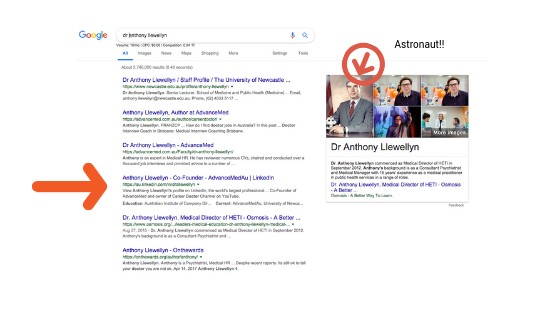
    • Employers now look on Google to check information about doctor job candidates. LinkedIn profiles rank highly in Google.
    • Health employers are now starting to incorporate LinkedIn as part of their advertising and candidate identification strategy. So potentially not being on LinkedIn means you could miss out on a doctor job that would have been to your liking.

    If none of that convinces you that LinkedIn is for doctors. Then consider this I have recently been getting approached by other doctors to help them with their LinkedIn profiles. These are doctors who never saw the value of the platform before and are generally not on many other social media platforms. Something must be up.

    But wait there’s more. LinkedIn has other uses and if used properly can help you in other ways in your career.

    Some of the other reasons why as a medical professional you should consider renewing your LinkedIn or starting a LinkedIn profile are:

    1. LinkedIn is a great place for keeping all your career information.

    Possibly the number one reason I like LinkedIn is that over time I have accumulated a lot of achievements in my career and LinkedIn is the vehicle by which I store these. For me. LinkedIn beats having to store multiple versions of your CV on your computer or dropbox and then going back over each of them the next time you need to submit your CV.

    I always revise my CV each time I am asked to submit it. Which at the moment is about 10 times a year for various consultancy work and Board positions etc… LinkedIn is often my source of inspiration for when I get stuck with highlighting a certain skill or criteria.

    2. LinkedIn for doctors is a great tool for controlling your online social presence and reputation.

    LinkedIn profiles have high authority with Google and rank well on search. Just Google your name if you are on LinkedIn or someone else you know who is and you will see what I mean.

    As a doctor you may not be concerned about your Google Search. But be aware that there are now a number of doctor review sites around where patients can express their opinion about you. And you won’t even know about it if you don’t go looking for it. Now you can spend time joining some of these sites and “claiming your profile” as well as establishing an active online presence. You can even develop your own authoritative website if you like. But that takes time. As Kevin.MD points out LinkedIn is not perfect but its a low risk, potentially low resource, high-yield action that you can take to protect your online presence.

    With LinkedIn its still currently very easy to distinguish yourself from other doctors just by completing all of your profile. Most doctors just don’t bother to do it right which is good for you and bad for them.

    3. LinkedIn Is Great For Building Strong Networks With Other Doctors As Well As Other Professionals.

    We all know the saying “Its not what you know but who you know”. LinkedIn was built with that proposition in mind. And that’s an incredibly intriguing proposition for doctors who have taken years to memorize medical information. If you don’t have a great network yet, Linkedin is the best place to start. Doctors on Linkedin are generally very easy to connect with, even the experts. Especially, if you contact them in a genuine and non-spammy way, you’ll probably be able to add them to your network. This is something you could not have done a few decades ago.

    4. LinkedIn Can Help In Creating A Personal Brand.

    LinkedIn allows you to tell the rest of the medical world and others how exactly you see yourself. But this requires thought and activity. So if you don’t feel you have the time or need for this particular point feel free to skip to the next.

    Personal branding is about building a reputation, authority and trust about you as a professonal. You are attempting to influence what people think about your when they see your content in a newsfeed or message. Will they click on the link you shared? Will they check out other people in your network and ask to connect with them as well?

    The key success factor when building a personal brand is to create valuable content for your connections. You can do this by creating content yourself or just curating interesting information.

    5. Doctors Can Use LinkedIn to Establish A Name As A Speaker Advisor Or Authority.

    Doctors can sometimes earn additional income from speaking engagements or gain valuable connections or leads. If your name and face come up a lot in their newsfeed next to valuable information, you’ll be perceived as a trusted expert who might be asked to speak or review something.

    6. Getting Relevant Information.

    With regular use Linkedin becomes better at deciding what information might be relevant for you. They look at the keywords in your profile, your groups and your connections in order to decide what content to show. They are also more choosy than facebook about how much unsolicited content to show. So it doesn’t feel like you are constantly bombarded. About once a week I find a really interesting headline that leads me to a nice in-depth article on a topic of interest.

    7. Getting Advice On LinkedIn From Other Doctors

    Imagine you are thinking of applying for a new job at a hospital you are unfamiliar with but you don’t know if it’s a good idea. When the hospital says that the roster is normally one in five at full staffing do they actually mean it and how often are they fully staffed? LinkedIn can connect you with people currently working in this hospital who can clarify your questions. There are lots of situations I can think of where you could use Linkedin in order to get advice from someone who’s already undertaken the experience you are considering.

    8. Being Found Online

    These days it’s critical to be found on Google. Every day, thousands of patients, recruiters, industry professionals and students are looking for your services. So why make it difficult for them to find you? Google loves Linkedin – if you complete your profile and stuff it with the right keywords, you will not only be found when people are searching your name but also when they are searching for your specialty.

    9. Landing Your Dream Job

    This is probably the most obvious reasons for being on LinkedIn. Even if you are not a very active participant and get slightly annoyed by being spammed occasionally. Linkedin can be a great place to look for a new job when you need it. Traditionally doctor jobs are not be posted in the regular jobs section on Linkedin. However that’s changing. And if you are particularly looking for a creative or non-traditional career path. Whether that be a side gig or a permanent transition then LinkedIn will be a useful source of information for you. In addition, you can join groups targeting your specialty. There’s usually a job discussion section in these groups. There may be tips on the interviews or even early leads on job opportunities. For e.g. you might find out that a Neurosurgery Registrar has just left Hospital X early, leaving a sudden vacancy. Have a look there, then look who posted the job and connect with them.

    7 Ways to Improve Your LinkedIn Profile As a Doctor

    1. Upload a current, professional profile photo. 

    Profiles that include a photo are estimate do be more than 10 times more likely to be viewed. Or to put it another way. Not having a profile picture seems weird and is often equated to an incomplete profile. So get a photo. And yes I know that this is completely the opposite of the advice that I give about CVs. But its social media.

    2. Be active on the platform.

    Active profiles get more attention on LinkedIn. You can be active by joining and commenting on groups and occasionally posting your thoughts on a topic. You can use LinkedIn as a form of blog or you can link your existing blog to LinkedIn

    3. Claim your LinkedIn tag.

    Create a unique URL. This will make your LinkedIn profile appear unique and give the impression that you have taken the time to establish your brand (For example my LinkedIn is linkedin.com/in/drallewellyn). A custom URL makes your profile more professional and it also allows you to add a nice looking link to your business cards and CV or resume.

    4. Use a customized headline.

    If you don’t then each time you change jobs, LinkedIn makes your headline your your updated title (if you remember to update it). Think about using keywords that you want employers to find you for in your headline either on LinkedIn or Google. The headline of LinkedIn is important for Google search.

    5. Keep your contact information up to date. 

    It’s simple, but oftentimes overlooked. Check the contact information section of your profile. Somethings on your LinkedIn profile are only visible to your connections. But contacts are visible to everyone.

    6. Don’t share any contact information you’d prefer to keep private.

    Its not kept private by LinkedIn.

    7. Don’t forget to update your work profile when you change jobs.

    Don’t be that person that everyone congratulates on their 12 year anniversary in a job they left 8 years ago.

    Don’t forget to update your work profile when you change jobs. Don’t be that person that everyone congratulates on their 12 year anniversary in a job they left 8 years ago

    Dr Anthony Llewellyn @careerdranthony

    8. Make your summary personal. 

    This is a bit like your Career Goal Summary but with a bit more individual flair and passion to intrigue readers.

    9. Fill out your profile as completely as possible.

    There’s a reason why LinkedIn keeps nagging you to complete your profile. It improves your search on the platform. Also, as I’ve pointed out already, Linkedin then becomes a repository of all your career information for you to draw upon the next time your revise your CV or resume. Completing your profile can be a big task. But you don’t need to do it all at once. Just chip away at it over time.

    So Why Don’t Doctors Join LinkedIn?

    Most established doctors (we are talking specialists here) have until this time lived and worked in relatively small, geographically defined locations without having to shift too much in their careers. They have managed to be successful through word of mouth and connections. The average Consultant felt that they had no need to sell themselves beyond this local market.

    It has also been generally held that doctors of a certain type are relatively similar in their skill sets (but not in their skill). For example what an orthopaedic surgeon does in Newcastle, NSW is likely to be similar to what one does in Perth, Western Australia.

    Patients up until recent have had little insight into the quality of doctors and still struggle with what the economists call “consumer sovereignty”, which is the ability of a consumer to use their own knowledge to evaluate the cost of a product or service in a market.

    But this is all changing. For one thing trainee doctors generally move around quite a bit and have to land several jobs before they are able to “settle down”. Patients are now getting access to insight and information about doctors through health review sites and there’s a lot more consumer sovereignty available now through Dr Google. Experienced clinicians are attempting to brand themselves in niches of medicine. And general practitioners are more regularly now referring to the internet with referring to a specialist.

    In addition to the above many doctors may feel that their presence on LinkedIn serves very little direct benefit. As Dr Howard Luks points out he probably has not had very many patients come to him from LinkedIn and a lot of the contacts he has had have been nuisances. However, this is not the experience of every doctor and Howard himself balances out this problem by referring to the utility for LinkedIn to be a protector of online reputation.

    What Benefits Have I seen From Being on LinkedIn?

    Whilst I used to treat LinkedIn as a bit of a passive place to park my career profile. I have experienced more quality connections on the platform by being an active user. This has included interesting job referrals, connections to like-minded doctors across the world and clients and other opportunities and leads. Yes. You still get some annoying messages. Mainly from locum agencies. Which really wouldn’t be annoying if I was looking for a locum. But honestly we are talking once a week at best.

    Related Questions About LinkedIn For Medical Professionals

    How much time do I need to devote to LinkedIn as a Doctor?

    Most LinkedIn users spend less than an hour a week on LinkedIn. But there are significant periods where they may be more active, for example, when looking for their next job opportunity. As I have pointed out above, LinkedIn is extremely useful if you want an online presence that you control but don’t have to spend a lot of time on.

    It is however important to regularly review your LinkedIn profile. So you can’t completely forget about it. Otherwise when an employer looks you up and sees that LinkedIn says you are still working in the job you were doing in 2008 when your CV says otherwise they will probably think you are sloppy.

    As a Medical Professional, Can’t I just use other social media platforms like Facebook?

    LinkedIn is a bit different from the other social media platforms. For sure as Facebook has grown-up along with its audience its taken on a more “adult” look. But LinkedIn is still a more business like and less “social” platform than Facebook’s friends, groups and pages model.

    You can’t really effectively record your CV on Facebook as comprehensively as you can on LinkedIn. And let’s face it the opportunities to be spammed and waste time are far higher on Facebook than LinkedIn.

    From a marketing perspective, LinkedIn also have some value. Because one of its primary purposes is for being visible among and connecting with fellow professionals, including other health professionals.

    Are there any alternatives to LinkedIn?

    There have been attempts to set up social networks just for doctors, such as Doximity (haven’t used this) and SERMO (joined and found there to be no real community and no value). But given their narrow focus and LinkedIn’s edge in terms of being established in 2002 these platforms have struggled to be adopted.

    I hope that by now I have convinced you that Linkedin is a great place to start your social media career as a doctor. Let me know how you have used Linkedin to your advantage in the comments section.

  • Should I Put A Photo On It? Photos On Medical Professional CVs.

    Should I Put A Photo On It? Photos On Medical Professional CVs.

    In my years I have reviewed tens of thousands of both doctor CVs as well as many other types of CVs and Resumes. I’ve gotten quite good at reviewing them quickly and determining who is and who isn’t a good prospect for a role.

    A question I get asked a lot by other medical practitioners, particularly medical students and trainee doctors, about their CV is “Should I put a photograph on my CV?”. There are 3 main reasons why you should not put a photograph on your CV. 1. A photograph on a professional CV can be seen as pretentious 2. A photograph on a CV provides an opportunity for the reviewer to infer biases about you simply based upon your opinion. 3. A photograph on your CV distracts the reviewer from other important information.

    There is also only one good reason why you should put a photo on your CV in my opinion.

    The Only Reason You Should Put A Photograph On Your CV.

    Let’s start with the reason why you should. It may seem fairly obvious. But there are some situations where the employer specifically requests a photograph on your CV. So if that is the case then you should obviously oblige.

    Ok Now. What about the reasons why you should not put a photograph on your CV? Well the first reason is that Medicine is a conservative profession and if you ask interview panel members most will tell you that they feel that a photograph is a negative. Its just not what is expected and therefore too novel. The second is that the presence of a photograph can introduce the opportunity for biases to occur just based upon your appearance, which is less likely to occur when there is plain text on the page. And the final reason is that a photograph is likely to distract the reviewer from reviewing the other details of your CV. Which is quite crucial once you know how long it actually takes someone to review your CV the first time!

    So my advice to doctors is to not put a photograph on their CV. There are too many possible minuses versus pluses to be gained.

    So you may be wondering now. Why photos can distract or introduce biases. As well as possibly whether the situation might ever change in relation to photographs on your CV.

    Why photographs are more likely to lead to biases

    It is well established in psychology that one way that our attributions may be biased is that we are often too quick to attribute the behaviour of other people to something personal about them rather than to something about their situation. This is a classic example of the general human tendency of underestimating how important the social situation really is in determining behaviour.

    When we tend to overestimate the role of person factors and overlook the impact of situations, we are making a mistake that social psychologists have termed the fundamental attribution error.

    One of the best text-book examples of this integrates stereotyping: Imagine two doctor CVs both are exactly the same in terms of the training and experience they have had. One CV includes a photograph of a young looking female doctor. The other male doctor does not include a photo. Both doctors are both the same age. Which of the two doctors are the panel likely to stereotype as being “too inexperienced for the role”?

    How long is spent looking at a CV?

    The Ladders Survey is well known and well cited in the HR profession. In this survey the Ladders recruitment agency brought in a number of professional recruiters and recorded their actions as they reviewed candidate profiles online.

    The results were stunning. On average seasoned recruiters were only taking 6 seconds to review a candidate’s resume and make a determination if they should be further considered.

    When a candidate did add a photograph to their CV. Looking at this took up 20% of that valuable average 6-second time.

    Pretty much everyone cites the Ladders Survey and the 6 second rule. And whilst we can debate whether its 6 seconds or perhaps a few more seconds. Lets say 8 seconds. If you talk to any doctor who is involved in mass candidate recruitment activities, such as annual medical recruitment. They will rapidly tell you that they have CV review honed to a fine art.

    By the way one thing that most people have forgotten about the Ladders Survey is that they also found that professionally written CVs were seen to be 60% easier to read.

    Update Feb 2019. Unfortunately the link to the 2012 report has been taken down. Ladders updated its eye-tracking report and reports that the average time for review has gone up slightly to 7.4 seconds.

    The Implications of the 6-8 Second Rule

    So if its only taking the JMO Manager or Director of Training 6 to 8 seconds to look at your CV and decide your interview fate. Why would you want to risk it on a photograph if you don’t have to? Far better to focus your efforts on making your front page stand out in other better ways as we have written about in the past.

    Will the Situation Ever Change?

    Probably. And I’m predicting in not too short of a time. A couple of things to look out for here are the fact that the technology for recruitment is advancing into a number of new spaces, including video resumes. Which means that at a certain point a photo on a CV will look more old fashioned than too new. The second thing is that it is now possible through google and social media to relatively easily find a photograph of a person who has applied for a job if you as the recruiter really want to. And in time I would expect that recruitment applications like many other applications become very good at finding the avatar photo that is linked to your email address and automatically incorporate it into your application. Scary huh?

    Related Questions

    Do I need to worry about having photos on my LinkedIn profiles and other social media profiles?

    The Answer to this question is no. How odd does it look when you find a colleague on LinkedIn and they don’t have a picture? Its expected (a social norm) on LinkedIn. As we have discussed above. Its likely that in a not too distant future that we won’t be talking about whether we should be putting photos on CVs. We will be talking about whether we should have a video resume or not.

    Are there other things I should avoid putting on my medical CV?

    Yes actually. There are several. Chief amongst these is probably unprofessional email addresses. You know the one you made up in highschool on gmail because it was funny. Its always best to strive for a professional sounding email. A gmail is ok if it contains you name and not too many extra numbers and underscores. If you want to up the ante a bit. You can invest in a personal domain name for a few dollars and set up your own branded email address and run this yourself or through Google.

    Some other things you should avoid putting on your medical CV are your date of birth (similar reason to the photo) and unrelated hobbies.

    What are the important things to have on my medical CV?

    For that particular question we have written you an entire post that covers it.

  • Doctor Jobs In Australia. The Best and Easy Way to Search.

    Doctor Jobs In Australia. The Best and Easy Way to Search.

    Probably one of the biggest question I get asked by International Doctors is. How do I find doctor jobs in Australia?

    In this post, I will try to demystify and break down the process for you. Starting with how to identify suitable posts online and then moving on to other strategies, such as personal approaches to employer and networking.

    Now the circumstances do vary a little between if you are working through the standard pathway process, the competent authority pathway process or the specialist pathway process. We will start off by focussing on identifying suitable posts for standard pathway and competent authority pathway doctors and towards the end of the post, I will turn my attention to the specialist pathway.

    By the way, if you don’t know what any of these terms mean. Then I suggest you check out the links to them on the Medical Board website OR watch the explainer video below.

    Finding jobs. General issues.

    There are a number of key steps you need to go through if you are an international doctor or IMG looking for your first post in Australia.

    Whether you are coming through the standard pathway or competent authority pathway your first position needs to be one that offers what is termed “provisional registration”. Think of this as a well-supervised post where you get the chance to demonstrate on the job that you are capable of working at the level of an Australian doctor. A year of provisional registration is a general requirement for all doctors coming via either of these two pathways.

    Herein lies the problem. Employers in Australia are under no obligation to offer positions for candidates that allow for provisional registration. In fact, by law, they are actually required to prefer Australian doctors over international doctors.

    Or to be completely accurate it is a requirement that if an Australian citizen or permanent resident demonstrates suitability for a position that they should be offered that job and it cannot be offered to a candidate from another country.

    Okay. But I know international doctors who have gotten jobs here. How does this happen?

    Labour markets are subject to issues of supply and demand. And there are often gaps in the supply or number of Australian doctors to fill positions particularly in less popular fields or less popular locations.

    So many employers will open the opportunity to international doctors. But usually after trying to recruit an Australian doctor first.

    In fact, if you do actually find a position advertised that will accept international doctors it’s quite likely that there will be very few Australian doctor candidates for this position. If any!  So that boosts your chances a bit.

    “Eligible For Registration”. The Key Magic Words.”

    As an IMG looking for doctor jobs in Australia, you can spend a lot of wasted time reviewing position descriptions and ringing potential employers if you don’t know where to look and what to look for.

    Think of this as similar to the initial review of a research article that you have found in your search for an evidence-based approach to solving a problem.  9 times out of 10 we will read the abstract of an article (or even just the title) and decide from that that the article is not relevant to our needs.

    The same goes for job search and job descriptions. The abstract is the Selection Criteria.

    Usually (but not always) these appear towards the bottom of the job ad or position description. Wherever they are find them and look at the criteria.  In a doctor job ad, there is always one selection criteria. Normally the first one. That describes what qualifications and registration you need.

    The magic phrase you are looking for is “eligible for registration” or words similar to this. 

    For international doctors looking for a doctor job in Australia. Skip to the selection criteria. The magic words you are looking for are: “eligible for registration.”

    Dr Anthony Llewellyn

    This means that employers will consider doctor candidates that need their assistance to apply for registration, ie. someone who has their AMC Part 1 or someone who is applying via the competent authority pathway.

    On the flip side if you see words like “current registration”, “has registration”, “general registration” or “full registration” this means that you are not eligible to apply for this particular job.

    Make sure you check all the selection criteria.

    Just because there is a statement implying that the employer will consider someone who is not yet registered does not mean you should go ahead and start putting in your application. You should take care to do a few other things first.

    Firstly, you should check through all the other selection criteria. There are normally around 6 to 10 of these.  Make sure that you are able to meet all the essential criteria and can give a reasonable impression for any other non-essential (otherwise known as desirable) selection criteria.

    Don’t know the difference between essential and desirable criteria? Watch this video.

    Next. Go through the rest of the job description. Make sure you understand what the role is about and that you are confident you can at least grow into the role with some help.  Pay particular note to where the job is located.  If you are not able to commit to working in this particular location. Then don’t apply.

    Looking online for doctor jobs in Australia

    Looking online is an obvious first place to start if you are looking for your first doctor job in Australia.

    The very first thing you should do if you are looking for jobs online is that you should go and register with all the State and Territory Health Department Portals.  This is where the bulk of jobs that will be suitable for you are posted. I have put a list of these below to help you out.

    You should also register with sites like Seek as most of these systems automatically upload their postings to these general job advertising sites as well in order to increase their reach to prospective candidates.

    Most of these recruitment sites have a system of alerts so you can be notified of suitable job openings.

    So you should definitely turn these alerts ON.

    In most States recruitment is centralized so it’s not necessary to look at each individual hospital or health service.

    However, in Victoria, there is a partial centralization through the central system as well as what is called the match system but many jobs are actually only advertised on individual health service sites.  So you will need to do a bit more looking around and registering if you are interested in a job in Victoria.

    Employment Portals

    As I said above. The types of jobs you are looking for are ones where they will accept someone who required provisional registration.

    The position titles to look at are anything with the word Resident or Resident Medical Officer in the title. These are by far the highest yield job titles.  And are the posts that are most likely to be open to International Doctors coming via either the Standard Pathway or Competent Authority pathway.

    However, you may occasionally see job titles such as:

    • Intern
    • Trainee
    • Unaccredited Trainee
    • Senior Resident Medical Officer

    OR Even

    • Registrar

    These are either less likely to be advertised (especially intern) or less likely to be open to doctors without registration but are worth reviewing.

    In some States. Such as Queensland and Victoria the service will revert to an Award Classification as a title.

    So, if you see something like:

    • House Officer

    OR

    • Junior House Officer

    OR

    • Hospital Medical Officer

    That is also worth reviewing.

    The key phrase in the selection criteria that you will need to look for is

    “ELIGIBLE FOR REGISTRATION”

    This indicates that the employer understands that once you are offered the job there will be a process of applying to the Medical Board for registration.

    If it just says Must Be Registered with the Medical Board or Have current registration.  Then you are not able to apply.

    I recommend in order to save time you skip to the Selection Criteria to see if you are suitable.

    Trickiness with selection criteria

    As a final comment.  You will often see additional Selection Criteria requiring certain amounts of or certain types of experience.  Sometimes they are happy for that experience to be from anywhere.  Sometimes it needs to be from within Australia.  Sometimes they may accept experience from one of the Competent Authority countries.

    This is becoming a real problem lately and it’s actually pretty poor HR practice.

    But it is basically an effort by employers to exclude certain types of candidates either because it cuts down on their workload of interviewing candidates OR because they feel they already have an existing candidate pool with these types of experience.

    Some other ways to find a doctor job in Australia

    Whilst looking online is going to be your best first starting point. A problem is that it’s also going to be everyone else’s best starting point.

    So however clever you think you are at finding those rare jobs that will accept an IMG application you can bet that if you found it then others have as well and have probably shared it with their friends and the dozens of IMG support groups on social media sites like facebook.

    The strategies below are easy to implement. They mainly only require an investment of your time.

    Its amazing how many IMGs ignore these tactics initially. So, if you want to give yourself an edge over the competition, I suggest you think about implementing one or all of them.

    Personal approaches.

    Don’t stop at just filling in applications for current vacant positions.  Make a list of all the hospitals you are interested in working at and find out who the Managers or Doctors there are who are responsible for entry-level doctor recruitment. Send them a short courteous email with your details and a tailored CV. To avoid it looking spammy try to personalize the email with some sort of information that you have researched about the hospital.

    In past roles, I have been added to blind copy (BCC) email lists. It’s pretty obvious when you and a thousand other Medical Administrators have just been sent a CV. I have always trashed these emails. Don’t do this.

    I recommend finishing your short email with the statement:

    I am interested in any resident level job opportunities that you may have. Or any other suitable positions.

    Career Doctor

    Don’t try to call at this stage. Don’t be dismayed if you do not get a response. At best you might get a reply to one out of ten emails. If you do get a reply offer to come and meet with the manager or doctor.

    Make sure your CV is up to scratch

    One reason that you may not get a response is that your CV is not up to scratch. Some of the reasons may be. It contains errors. It might be missing vital information. It may not be well directed to the particular hospital. So before you start emailing brush up on how to write a medical CV in Australia.

    Networking.

    Networking is not often thought about as an opportunity to identify job positions.  But it is.  Most international doctors in my experience tend to hang out with other international doctors. This is perfectly ok if you are studying for things like the AMC exam. But it isn’t going to advance your job prospects. Find ways of hanging out with actual real employed Australian doctors. Some examples of how you might do this are by undertaking a clinical observership, going to medical conferences, becoming a medical school tutor, and enrolling in some of the courses that trainee doctors undertake.

    There are two key advantages to this. Firstly, you are getting better exposure to what it’s like to work in the Australian medical system. Secondly, as you develop friendships with employed doctors you will start to find out about potential job opportunities as well as get assistance with personal referrals to people in the hospital who are in charge of doctor recruitment. This will help you get through the first filter and have a chance to put your case forward.

    Private hospitals.

    Most general practitioners are employed in the private sector.  So that’s where you need to look if you are after a general practice job.  And most general practice doctors have understood this for quite some time.

    Private hospitals on the other hand have been a bit overlooked in terms of possible positions for international doctors.  This is probably because traditionally to work in a private hospital you needed to be an actual Consultant, a Fellow of a College, who can bring patients into the private hospital and allow the private hospital to charge. Or a fairly senior and experienced doctor who can work efficiently for the hospital and particularly free up the Consultants.

    Of late things have been changing. There have been some private hospitals that have started to take medical graduates as part of the intern allocation process. And some hospitals are now seeing IMGs as possible options for providing general ward cover.

    You might try approaching these private hospitals individually or many work as part of a group of hospitals where you can apply for a range of job opportunities.

    Getting out there.

    In my “5 Tips for Working as a Doctor in Australia” video I point out the medical job labor market in Australia is driven by an issue of supply and demand, whereby prestigious hospitals in capital cities are generally sought out by doctors. This means that the cities tend to draw doctors from the regions and the regions from the rural and remote areas.

    As a result. The more prepared you are to get out past the big places like Sydney, Melbourne, and Brisbane. And even bypass the Newcastles and Geelongs. In favour of the Burnies, the Rockhamptons, and the Armidales. The more likely you are to be able to actually meet with someone who might be interested in seeing if you are a good fit to work at their hospital.

    I speak to so many International Doctors about this tip. And so many ignore this really sound piece of advice. It can be hard to move your family if you are established within a like community in a capital city. But you will often find that there is a lot of local support and gratitude that makes it worthwhile at the other end.

    Should I register with a recruitment agent?

    In the above video, I talk about the potential benefits of working with a recruitment agency.  Sometimes the agencies know about other job opportunities that are not well advertised publicly.

    However, it’s not as simple as just registering. Recruitment companies have to make a living. So they are not going to take on any doctor for whom they feel that there is not a real prospect of landing a job.

    In my experience, you are wasting your time contacting recruitment agents if you are on the standard pathway unless you perhaps have a prospect of working in general practice.  

    On the other hand, it may be worth contacting a recruitment agent if you are eligible under the competent authority or have already gone through the specialist assessment process.  Particularly if you work in one of the higher-demand areas, such as critical care, psychiatry, or general medicine.

    I’m a General Practitioner. How do I find a job?

    This is a great question. And, I’m hoping to provide some more information about this for you shortly. Many of the strategies discuss above will work if you are looking for general practice roles.  You are not, however, generally looking for those keywords of “eligible for registration.” And you are unlikely to find many general practice positions advertised on the State and Territory recruitment sites.

    I’m a Specialist. How do I find a job?

    This is a great question. And, I’m hoping to provide some more information about this for you shortly. Many of the strategies discussed above will work if you are looking for specialist positions.  You are not, however, generally looking for those keywords of “eligible for registration.”

  • #TipsForNewDocs | Tips For New Doctors in 2019

    #TipsForNewDocs | Tips For New Doctors in 2019

    This month around Australia the new medical graduates join the health care system as Interns. #tipsfornewdocs is an initiative to extend a welcome from #olddocs to the system

    Welcome to all those new Interns who have started in the Australian health care system this January.

    In the spirit of welcoming you and being helpful we would like you to have a helpful term changeover checklist on us (courtesy of our community manager Rachel.

    #TipsForNewDocs

    The hashtag #tipsfornewdocs is credited to the PRINT Conference. They have been running awesome Pre-Internship preparation conferences in SydneyMelbourne and Brisbane for several years now.

    Its an initiative to connect #newdocs with #olddocs and welcome them to the system and profession.  As you can see from our collection of favourite tips. Its now an international phenomenon.

  • Doctor Interview Coach in Brisbane: Career Coaching Brisbane

    Doctor Interview Coach in Brisbane: Career Coaching Brisbane

    Interviewing for a job as a doctor can be stressful, especially when its been a while since you may have had some practice.

    A way that some doctors choose to improve their interview skills is to work with a coach. During interview coaching, a doctor meets with a professional coach to learn strategies for being more relaxed about the interview process and of course to perform better.

    Should you work with an interview coach? And if so, how can you find a doctor interview coach in Brisbane? 

    doctor interview coach in Sydney

    Why Interview Coaching?

    The most obvious reason is that interview coaching can help increase your chances of getting a job.  There are a number of ways this can occur.

    Coaching can help you overcome any nerves or anxiety you have about the process.  Coaching gives you a chance to experience answering many different interview questions. Coaches provide you with feedback to help improve your responses during interviews.The more you practice with a coach, the more confident you will become.  By engaging with a coach you are also ensuring that you commit to your own practice regimen, which is important for a good performance.

    Some reasons you may want to consider engaging a doctor interview coach:

    • It’s been awhile. If it’s been a few years since the last time you interviewed for a doctor job or if your last interview was fairly simple and you anticipate this one will not be the same, then a coach can help you rehearse and regain your interview confidence.
    • You get nervous before interviews. A little bit of anxiety is good going into an interview. But too much anxiety can affect performance. Practicing with a coach can help you feel more comfortable, relaxed and prepared.
    • You get interviews, but not offers. Often its difficult to get honest feedback from medical interviews.  A coach may be able to help work out what is going wrong for you.
    • You are not sure about something on your CV.  Maybe you have had to have a break in work. Or your last job didn’t go so well.  Are you perhaps switching specialties.  A coach can help you with how to tell the right story in relation to these sorts of issues.
    • Its your dream job and you want to land it. A coach can help with feeling confident in these situations.

    On the other hand, if you’re a confident interviewer and have always tended to perform well during interviews, then a coach may not be necessary.

    Types of Interview Coaching

    There are many types of interview coaching. Some coaches meet with you in person, and others speak with you online or on the phone.In general interview coaches work on something called “performance coaching”.  Think of it like a sports coach working with an elite athlete.  A key element is practice with feedback.  The more practice and the more immediate the feedback the better.

    If you meet the coach in person or online, they can also help you develop effective visual communication. The coach can work with you on facial and body expressions that convey trust and show active listening.

    Coaches may also help you with other elements of the interview, including how to ask the right questions of the employer, how to research the job and the panel and even some advice on how to dress.

    How to Find a Doctor Interview Coach in Brisbane

    There are lots of coaches available to choose from in a capital city like Brisbane.  Career coaches often offer interview coaching.  Some things you should consider in a coach are the following:

    • What is their training and experience in interview coaching?
    • What sort of knowledge and experience do they have with the actual interview process.  Medical interviews can be fairly unique, particularly in terms of the types of questions asked and what panels may be looking for.  So someone who has actual doctor interview panel experience is ideal.
    • Do they provide face to face coaching or on the phone or online.  Face to face may seem best initially.  But consider that you may need to travel to see the coach and often during normal work hours.  Phone coaching and online coaching may be more convenient and cut down on travel.
    • What feedback is provided after each session.  Phone and online coaches can often give you a recording of the session for you to review.
    • What is the price of the coaching.

    If you cannot afford a coach, there are some opportunities for less expensive or even free coaching. Your Director of Training may be skilled in interview coaching or may be able to recommend another Consultant in your hospital who is.

  • Top 16 Resident Medical Officer Interview Questions With Answers.

    Top 16 Resident Medical Officer Interview Questions With Answers.

    I wrote this post as I have been collecting questions that are typically asked at a resident medical officer (RMO) interview. So these top 16 resident medical officer interview questions are based upon what job candidates have reported are the common types of interview questions being asked by hospitals in Australia for resident medical officer jobs or what are sometimes referred to as junior house officer or hospital medical officer jobs in Australia.

    For resident medical officer interviews, you will commonly have around 20 minutes with a small panel of 3 or 4 and be given between 4 to 6 questions to answer briefly. These will generally consist of:

    • an opening question about your experience or interest in the role;
    • questions about past examples of handling conflict or dealing with errors;
    • questions about strengths and weaknesses; and
    • at least one clinical scenario where the focus will invariably be on recognising a sick or unwell patient and asking for help early.

    So typically these jobs are at a postgraduate year 2 level. Hospitals often post these openings throughout the year in an attempt to fill gaps in their trainee doctor rosters. So these jobs offer opportunities for Australian doctors to move hospitals but also provide opportunities to get their first job experience in Australia.

    I am posting this information as it may help both local as well as international medical graduates who are fortunate enough to be offered an interview for a resident medical officer-level job.

    The Top 16 Resident Medical Officer Interview Questions.

    Question 1. Tell us about your experience and how it makes you a suitable candidate?

    I’ve written in another post about how this question is often just asked in the shortened version. “Tell us about your experience.” In which case it’s a very lazy question. It’s often asked because sadly on some resident medical officer interview panels, the panellists are slotted in the day before and do not have time to review your application and CV.

    Regardless of how the question is asked you should answer it by telling the panel about how your experience makes you a good candidate.

    Do this by picking out one, two, or three of the selection criteria and relating your experience to them.

    So, for example, a common selection criterion is communication skills. So talk about how your recent experience has been working in a hospital with lots of patients who are from a Non-English speaking background and how you have had to collaborate (probably another selection criteria) with other members of the team to meet this challenge.

    I recommend that you take a portfolio of relevant files to the interview. One of which should be a printout of the selection criteria. This is very handy for working out why they are asking certain resident medical officer interview questions.

    Question 2. What are your long term career goals and why this hospital?

    This is the other common opening question when it comes to resident medical officer interview questions.

    If you have written a Career Goal Statement that is tailored to the job description then you pretty much have the basis of the answer to this question.

    This question is digging into whether you have done your appropriate research. Have you identified a reason why the hospital will help you in your career? For example, does it have good exam pass rates? Or is there a particular subspecialty that is not available elsewhere?

    Whatever the case you should be able to identify something of value in the position that will help you. Make sure that you are emphasizing that it’s a positive factor about the health service or hospital. Interview panels want to hear nice praise about their institution. But also make sure that you quickly bring it back from your personal needs to what you can give to the hospital.

    This should be something or somethings reasonably unique to you and not what other candidates might also choose to talk about. See below for strengths and weaknesses.

    Question 3. A member of the nursing staff complains that an intern is not attending calls and not doing duties properly, what will you do?

    A big tip for this question is to avoid the inclination to stereotype nursing staff and refer to the nurse in this scenario as female.

    Hypothetical scenarios are common in doctor interviews and especially for resident medical officer interview questions. This particular interview question bundles both the potential for work conflict (between yourself and the nurse, yourself and your colleague, and the nurse and your colleague) along with the topical matter of trainee doctor well being and what’s called the trainee in difficulty.

    So the key here is to cover all the key principles in the scenario. To show you have a broad awareness of what might be going on.

    Another very good tip for this question as well as most other questions is to list your key points first. That way the panel knows what you are thinking, even if you run out of time to address all the issues.

    The key points here would be:

    1. How you engage in the initial discussion with the member of nursing staff in a respectful and listening manner.
    2. What your strategy for approaching your colleague is. And again, how you are going to conduct that initial conversation, which is often referred to as a “quiet chat”.
    3. The potential outcomes of your “investigation” into the problem. In particular, how you would handle it if your colleague was resistant and how you would handle it if they confided in you a problem.
    4. Your responsibility to discuss things with more senior colleagues.

    Question 4. Describe an error you made in your practice and what you did to fix it?

    This is an example of what is called a Past Behavioural Question. Panels like to ask for examples of past work that fit the current job challenges as demonstrating what you do is far more powerful and predictive than saying what you would do.

    When preparing for resident medical officer interview questions you should definitely have an example of an error ready to give. As well as one about work conflict (see below).

    The key here is to be able to give an example of an error that was significant but for which there was not a really terrible outcome. The best examples are system errors or simple communication errors. If possible it should be something where you caught the error yourself and then there was an attempt to look at the system to improve it for next time.

    So for example an error where the wrong data was entered on a discharge summary because the electronic record system was unclear would be a good one. So long as the patient was okay in the end.

    Answer all example-type questions using the STAR method.

    STAR stands for

    • Situation
    • Task
    • Action
    • Result

    Please. Please. Please don’t forget to give the panel the result of the example. So many times job candidates tell the story but then fail to sell it by going over the results of their actions. If you don’t talk about the results of your actions the panel will assume you are not results-oriented and probably also take feedback poorly. Not good.

    Question 5. What strengths do you bring to this role?

    This is sometimes answered alongside a request for weaknesses (see also below). If also asked for weaknesses. Start with weaknesses first and give just one. Then end with two or three strengths.

    For strengths. Try to come up with something reasonably unique and remember it needs to be relevant to the role.

    So things that are not unique to say are:

    “I’m an excellent communicator”

    “I’m a team player”

    Because pretty much everyone does say that about themselves at these interviews.

    It doesn’t have to be overly specific. Just something which you can back up. So for example, if you have done a lot of teaching in your career and have good feedback on this. This would be a good strength to highlight in terms of any teaching responsibilities of the role. There are always at least some medical students floating around that need looking after.

    Question 6. A nurse is insisting to give medication to a patient whom you don’t know and you don’t know the medication. What do you do?

    Some questions seem simple on the surface. But providing a simple answer is not going to get you very far. It’s obvious with this hypothetical question that you should of course not go ahead and prescribe the medication.

    But you need to show your awareness of the needs of others in this situation, in particular the member of nursing staff and the patient.

    • How are you going to discuss your dilemma with the nurse and possible the patient?
    • Is the situation urgent? Will you need to call your senior for advice?
    • Do you have time to go away and look up the medication and review the patient’s file?
    • What will you be telling the nurse? Their job is probably being held up by your current lack of knowledge. So you should be indicating to them when you will be able to get back to them.

    For hypothetical scenarios, the CanMEDS Framework from the RCPSC is a great model. It gives you lots of ideas about what sorts of issues to cover. It’s also the framework upon which every Australian medical specialty college has built its frameworks upon.

    CanMEDS Framework useful for resident medical officer interview questions
    CanMEDS Framework

    Question 7. Describe a situation where you displayed leadership skills.

    Again. We are looking for an example here. So using the STAR method is recommended. It’s sometimes difficult as a trainee doctor to find opportunities to demonstrate successful leadership. So don’t forget “followership”. This is where you act like the first person to follow a leader and help them to enact a change.

    Good examples are things like noticing a safety or quality problem on the ward and instigating a change. For example, perhaps a ward trolley was inadequately stocked and you worked to improve the situation. Be prepared however to demonstrate evidence of lasting change. Did you go back and check that ward trolley after you left that rotation?

    Question 8. What is the importance of documentation as a doctor?

    This question tests your awareness of some of the key requirements of the role of trainee doctors. Particularly the most junior trainee doctors where documenting (or dealing with computer information systems) can be 80% of the job on a daily basis!

    Obviously documenting IS important. But Why? Again, the CanMEDS framework may be a helpful construct for you in this question.

    You might also legitimately answer this question by saying: “Documentation as a doctor is tremendously important and I am going to give you 3 examples of why?” Then give three good examples.

    There are so many angles to this question that giving 3 good examples is going to be just as good as covering every point that you could imagine.

    Question 9. Describe a situation where there was conflict between yourself and another member of a team?

    This question is a big but avoidable trap. You can avoid it by being prepared for it and having an example. Again. The STAR method is your friend and the key here is to be able to demonstrate that you managed the conflict to a point where you were at least able to have a good ongoing working relationship with your colleague.

    It is important to not only describe the situation and the conflict. But also take the panel through the steps you took in terms of your communication and collaboration to work with your colleague on the conflict and how you showed respect to them.

    Question 10. You are covering the obstetrics and gynaecology wards one evening and a 35 year old female patient who had a caesarian section 2 days ago is now presenting with severe shortness of breath and chest pain. What is your approach?

    You can insert here any typical clinical scenario which might happen on the ward where the resident medical officer is called to review. Chest pain and other types of escalating pain are favorite scenarios. Usually, the scenario is in two parts. The initial question is in the form of the information you might be given when a member of the nursing staff calls you.

    The next bit is the examination findings. Generally, the examination findings are either of a patient who is deteriorating or already in need of an emergency response.

    So the key aspects of responding to these questions are not to give a textbook answer to the clinical problem. But to frame it in terms of your role as a very junior member of staff. You need to spell it out to the panel. You need to let them know that:

    1. You would prioritise the call – Go Straight Away.
    2. You would ask for vital signs over the phone.
    3. You would ask the nurse to call an emergency response. If the vitals warranted it.
    4. You would ask the nurse to stay with you to help.
    5. You would have in the back of your mind a question about “What could be the worst case scenario here?” for example a pulmonary embolus.
    6. You would take a quick history and examine the patient.
    7. You would have a low threshold for calling a senior colleague and/or an emergency response.

    Question 11. Describe a situation where you displayed effective communication skills.

    This is similar to the conflict question above. And in fact. It is perfectly okay to use the same example to answer more than one question.

    Other typical situations to think about for this question, include complex patients and/or patients and families with communication challenges and/or patients and families who are upset with their care.

    Question 12. What qualities should a resident medical officer posses? Which ones do you have and which ones do you lack?

    This is basically a variation of the strengths and weaknesses question.

    But there is also a big hint stating you in the face. The position description, in particular the role statement and the selection criteria. So you can use these to your advantage.

    You might start by saying something like:

    “Well, I understand from reading the position description that the key roles and capabilities are as such…”

    This shows you have done your research and you are willing to align your opinions with the panels’ views of what a good resident medical officer is.

    You can then go on to highlight the sort of qualities that an individual might need to meet these criteria and match them to your own.

    So for example. The ability to work under pressure is often a selection criterion. So you could talk about this requires the quality of being calm in a crisis and being able to juggle a number of tasks.

    How To Talk About Your Weaknesses.

    Basically, you should not choose to talk about something that is a big weakness that you have chosen to do nothing about.

    You should also not choose the weakness that everyone picks. e.g. “I’m a perfectionist” or “I can work too hard.”

    Ideally, you should pick something that you have identified that you are not so strong and have been working on.

    For example, maybe you struggle with reading. And you know that this is important for the exams. So you have joined a study group where other members are better readers and you are challenging yourself and keeping yourself accountable that way.

    Question 13. Describe a situation where you displayed teamwork.

    Again. We are starting to repeat ourselves with this question and questions about communication, conflict, and leadership.

    Great examples here are situations where you noticed your colleague was struggling. Perhaps they had a bigger caseload than you. And you stepped in. Others might include helping to onboard a new doctor to the team.

    Question 14. You are called by nursing staff and are told that some antibiotics were given to a patient that were actually supposed to be given for another patient, what do you do?

    Once again the CanMEDS Framework will be helpful here.

    Let’s look at it in more detail.

    Health Advocate.

    So. Obviously your first concern is for the safety of the patient who was given the wrong antibiotics. Are they allergic? Do they need monitoring? Also, has anyone else been given the wrong medications and needs to be checked?

    After this, there is the issue of disclosing to patients and their families what has happened. You are representing the hospital so you need to be able to talk about how you would carry this function out. You need to do the initial disclosure but then be aware that more senior staff should be informed and take it from there.

    Communication.

    So. There is how you communicate with the patients and families about what has happened. There’s also communication with your nursing colleague and there is communicating with seniors.

    Collaborator.

    You are needing to work collaboratively with the nursing team to identify all the current risks and deal with them. You also need to be mindful of keeping good relationships with the nursing staff. The nurse may be in trouble for what has happened OR possibly they were doing the right thing and a doctor has made an error.

    Professional.

    There will be hospital policies and protocols that need to be followed. You may not be aware of all of these but it’s your responsibility to find out about them. The incident will need to be reported and you should be making careful notes of your involvement in case there is an investigation.

    Potentially in this scenario, there has been a breach of professional standards. But that’s not immediately evident.

    Leader and Scholar.

    Is this the only time this problem has occurred? Was it predictable in hindsight? Does there need to be some thought to changes that would prevent it from happening next time or an audit of processes?

    You noticed I didn’t even mention a medical expert in all of this.

    Question 15. Describe a situation where your consultant noticed that you have made a mistake and how did you react?

    This one may be hard for international medical graduates to answer if they have not had any medical work experience for a while. If so, panels will usually accept a suitable example from another job.

    This question is a variation of the error question. So again. The idea here is to not produce an example of something where it all went terribly wrong. If you think about it there are probably lots of times where your senior colleagues have pointed things out to you that have helped you improve. We learn a lot from mistakes. And this should be part of your answer.

    An ideal answer would include how you encouraged your consultant to give you specific feedback about your mistake so you could improve for next time. Bearing in mind that most doctors are terrible at giving feedback to other doctors. And then how you measured your success.

    Question 16. You are the Resident in Emergency and a patient suddenly collapses. What do you do?

    Basically another clinical scenario where you are the first responder. You should not forget that even though you are in the Emergency Department you need to call an emergency so that others respond.

    Once you start getting into going through the DRABCs. There will probably be some supplementary information provided about the patient. Along the lines of them being in shock. Again. Call for help whilst dealing with this situation.

    Bear in mind that it’s a rule that doctors in prevocational roles should not be the only doctor in the Emergency Department so there should be someone more senior to call upon.

    Related Questions.

    Question: Should I Ask A Question At The End?

    Answer. In most cases, you have probably already had a chance to ask questions before the interview. So it’s perfectly fine to say no. But remember that the final question at the end is a chance for you to go back and review some of your answers or clarify anything you feel you may have gotten wrong in the interview.

    If you are after a good sort of question to ask. Think about asking for some feedback on how your interview went. Whilst the panel obviously can’t tell you whether you were successful or not. They may have useful insight for you. And this may be your only opportunity to get meaningful feedback.

    You might also consider asking the panel what they feel that their biggest challenge is at the moment. Only do this however if you think you might be able to offer some assistance in meeting this challenge.

  • How Much Does An Intern Get Paid In Australia? Doctors Pay Rates

    How Much Does An Intern Get Paid In Australia? Doctors Pay Rates

    One of the questions I am most asked by doctors from other countries is: “What is the pay like for doctor’s in Australia?”

    We are approaching the period here in Australia where we introduce a large number of graduated doctors to the Australian health care system as Interns.

    So at AdvanceMed we thought that we would review what the rates of pay are for Interns in Australia. The findings are quite interesting.

    A Wide Variation In the Entry Doctor Pay Rate

    The results above reveal that there is a wide variation of over $10,000 per annum in an intern salary from NSW, which pays the lowest at $67,950 to Western Australia which pays the best at $78,479 per annum.

    The reason for the large variation is that each State and Territory sets its wages for public employees separately through something called an Award or an Agreement.  These are formal documents that state the conditions of employment.  They include matters such as the hours of work, the leave available and of course how much you get paid.

    Doctors like other public employees do not generally contract as individuals for their services with hospitals.  So everyone gets the same conditions.

    According to the Australian Bureau of Statistics Full Time Adult Average Annual Ordinary Earnings is was $82,752 in 2018.  So bearing in mind that it takes a minimum of 5 years of university study (with a fair collection of higher education debt to pay off) to get to this point we can certainly not consider Interns to be extremely well paid.  

    But its not all that doom and gloom.  Whilst, Interns certainly do not work the amount of overtime they used to 10 or 20 years ago.  Overtime provisions, as well as loadings (working rostered hours on an evening, night or weekend) under most Awards and Agreement can lift the annual take home pay of an Intern significantly. For e.g. most overtime starts off being paid at 150% and rapidly goes to 200%. So, if an Intern works on average 50-60 hours per week they are likely to hit Full Time Adult Average Annual Ordinary Earnings, even in a State such as NSW.

    It Goes Up From Here

    And, of course it does improve significantly from this position. By the time a doctor becomes a Registrar in Victoria for example, their regular pay has increased to $105,000 per annum (after a period of 2 or 3 years). And a first year Staff Specialist in NSW can earn upwards from $234,566 per annum.

    A Special Bonus For Interns

    An additional bonus for Interns comes the first tax time. In Australia the Financial Tax Year runs July to June. So, because you have not been paying much in the way of taxes for the first half of the financial year, you end up paying more tax than you need to in your first 6 months of Internship and can get a reasonable return come tax time. For this reason, some Interns seek to work extra overtime before 30th June.

    What’s Going On in NSW?

    When I was an Intern, NSW paid some of the best salaries for trainee doctors in the country. States like Western Australia (which is now first) were actually towards the bottom of the list.

    Given that NSW is the biggest State by population, one of the richest States economically. And given that Sydney (NSW’s capital city) is probably the least affordable place in Australia to live it makes little sense that NSW Interns get paid the least.

    Its hard to know exactly why this situation has occurred. Its possible that the industrial groups that represent doctors in other States and Territories have been more successful in representing trainee doctors over the years.

    This certainly seems to be the case if one looks at the Enterprise Agreement for doctors in Victoria.  Which even includes an allowance for continuing medical education, as well as separate provisions for internal training leave, examination leave and conference leave.

    This situation puts the NSW trainee doctors Award to shame. This instrument has not been modified in any significant way since the 1990s (possibly longer).

  • The Benefits Of A CV Check – Why You Should Get Your CV Reviewed. Medical CV Australia.

    The Benefits Of A CV Check – Why You Should Get Your CV Reviewed. Medical CV Australia.

    The Benefit of a CV Check or Resume Review

    As we enter the new academic year for medicine in Australia and New Zealand many doctors are thinking about whether they might be applying for a new position in 2020.

    Yes. It’s that competitive in some situations. That even before you have commenced your current job you are thinking about the next.

    One thing that is vital to ensuring you progress smoothly through the job application process and gain an interview is a powerful CV or resume. We have written about this already here and here and here.

    You might even be considering getting some expert assistance with developing your CV.

    But before you do. Consider whether it’s not worth the effort to construct this vital document yourself and get it checked or reviewed rather than handing over the entire enterprise to another party.

    Why have your CV reviewed rather than engage a professional CV writer?

    There are a number of reasons why a CV review might be the better option for you.

    Firstly, you can probably find someone with expertise in your own hospital who is happy to review your CV for free. Barring that a professional CV review is a much more affordable option if you want to go down the paid route. (Around $100 for a review versus $300-$500 and more for a CV writing service).

    Secondly, by constructing your CV yourself you get a deeper understanding about your own career. Including your strengths, capabilities, weaknesses and what value you can bring to future employers. This is all useful stuff when it comes to the interview.

    Thirdly, when you engage a professional CV writer you still have to provide the content and this can be quite a lengthy process where you may feel like you end up writing most of the CV yourself anyways.

  • The Benefit Of Buddy Systems in Medicine

    The Benefit Of Buddy Systems in Medicine

    Starting a new job in Medicine can be exciting, but it can also be very stressful. How often have you started a new rotation or a new job and felt a bit lost on the first day? Have you ever had an experience where you can honestly say that you “hit the ground running?” Assigning a workplace buddy can help ease the transition for new employees into their new roles can be very beneficial for all involved, especially during the onboarding process.

    What is a Buddy System?

    Buddy systems have been used in other industries and schools for many years and proven to be effective ways of ensuring that employees get off to a good start. This has all sorts of benefits to both employee and the organisation.

    Simply put a buddy system involves assigning a new employee a workplace buddy. The buddy is an existing doctor who guides the new doctor through the first few weeks or months on the job. In Australia we have started to see the rise (or in some cases rebirth) of buddy programs, sometimes also referred to as mentor programs. In particular it is now common in the State of NSW, for the second of the 2 weeks of Intern induction to consist of a “buddy week”, where the new intern gets the chance to understudy a finishing intern in their first new rotation. Whilst these buddy weeks are quite popular they do have their limitations. The key one being that because the relationship is very brief it only really permits a small transfer of knowledge and in particular doesn’t afford the new intern doctor a chance to reflect and ask questions of their buddy about the hidden curriculum of the workplace.

    Evidence has emerged that longer relationships between new employees and existing employees in Medicine can help reduce stress, and improve morale, sense of support and job satisfaction.

    Buddy systems should include a formal documented process that outlines the buddies’ responsibilities as well as what items they should cover over the first few weeks or months of employment. The buddy system should also encourage the new employee to share tips, tools, knowledge, and techniques they have learned about the workplace. A buddy also potentially gives the new doctor a psychologically safe opportunity to offer confidential feedback about how their onboarding process is going. For these reasons the closer the buddy is to the new doctor in terms of peer relations the better.

    Why Implement a Buddy System?

    The last thing we should hear from a doctor on their first day is “Nobody knew I was starting today.” At the end of their first few weeks in the job we want new interns to feel that they made the right decision to study medicine and for other doctors starting new jobs we want them to feel that they accepted the right position.

    First impressions are key. The initial enthusiasm that interns experience to have “finally made it” can be either lifted or ruined, depending on their start. What happens during the first few days can determine the long-term perception of the job and the organization. Studies have shown that a large number of employees quite within 6 months of taking up a job. Often citing a poor onboarding process or lack of clarification about their role as the key reason for doing so.

    Regardless of whether there is a formal process in place or not, onboarding is going to happen; the real issue is the quality of the experience. When onboarding is done well it sets up new doctors for long-term success. If an orientation consists of handing the new intern a pile of forms to fill out on their first day, then there are going to be future problems, which is where a buddy system may come in handy.

    Implementing a buddy system can be part of an effective onboarding program that provides new doctors with a way of resolving questions regarding work processes. Some of which may be difficult to predict and / or hard to deal with in a formal orientation seminar. This socialization and support can make a big difference.

    In particular, a buddy can help with the last 3 of the 4 C’s of onboarding: Compliance, Clarification, Culture and Connection.

    The buddy system is not only valuable to the new doctor. Its obviously also an opportunity for existing doctors to develop skills as a mentor and may foster the early development of a range of people management and leadership skills.

    From a bottom line point of view a well executed buddy system will likely reduce the number of doctors leaving a hospital or organisation, particularly early. And this will save the hospital a lot of money in re-recruitment costs.

    But at a deeper level buddy systems can improve employee engagement with the organisation which can be a vital component of instilling a positive workplace culture. Which in itself is likely to lead to better outcomes in terms of both patient care and cost.

    Benefits To BuddyBenefits To New Doctor
    RecognitionOne-on-one assistance and single point of comfortable contact
    Expand NetworkJump start on networking
    Opportunity To LeadSmoother acclimation
    Fresh PerspectiveKnowledge of “how things really get done”

    What Is a Buddy?

    A buddy is someone who partners with a new doctor during their first few months of employment. He or she is a colleague assigned to assist the new doctor to get through this period. They can provide insight into the daily activities of the hospital and help the new doctor fit in more quickly.

    An effective buddy is a good communicator, has an interest in the development of others and is the type of doctor the organisation hopes to emulate (fits with the value system). They will generally take the new doctor around their hospital and orientate them and introduce them to key people who can help them out.

    A Good Buddy

    • Is known as a good performer and well regarded;
    • Is willing and able to mentor others;
    • Has the time to be available;
    • Knows the new doctors job;
    • Is a peer of the new doctor;
    • Has good communications and interpersonal skills.

    A good buddy should be a good representative for the culture and values of the hospital and organisation and be familiar enough with the formal and informal organizational structures to be a reliable source of information.

    Buddies Should Not Be

    A buddy is definitely not a supervisor and probably should not be a mentor (at least in the first few months). This helps to make the task of the buddy more limited and definable. Learning how to be an effective buddy can be useful as a foundation step to learning how to be a mentor or supervisor. The buddy is are available to answer straightforward questions about how the hospital operates. It is important to make clear to both the new doctor and the buddy that the buddy is not being asked to develop the new doctor and is not accountable for performance. This makes the buddies role easier in terms of being able to support the new doctor without fear of reprisal.

    If a doctor does not want this extra responsibility, then they should not be assigned the buddy role. Some doctors simply don’t want the responsibility or are not ready. Worse, some doctors are not well suited temperamentally for the role. A doctor who is known to be someone who gossips at work is probably not a good fit for a buddy role. The last thing a new doctor wants to hear about is gossip and speculation in their first few weeks.

    What Do Buddies Do? What Training and Support Do They Need?

    Buddies should be given the skills and knowledge to be able to:

    • Teach or tutor, for e.g. explain an unfamiliar task;
    • Explain tactical matters, such as how to submit a time-sheet and where the pathology forms go;
    • Talk about and explain the hospital’s structure, written as well as unwritten rules;
    • Share insights on how things are done in the hospital;
    • Involving the new doctor in social activities, such as coffee and lunch with new team.

    Buddies can benefit from some training and support in their role. But probably the best thing that can be provided is a suggested list of task and a timeline for completing them.

    Generally speaking the buddy is encouraged to meet more frequently with the new doctor e.g. daily for the first week, weekly for the first month, monthly for the next few months and gracefully exit from the relationship. Its helpful to set a solid time frame for when the relationship finishes (6-months is generally good).

    During the first few meetings the buddy works to help with urgent and practical questions. As the relationship matures and the new doctor finds their feet the explaining turns into more of the “why things are done this way around here.”

    Tips for Being a Buddy

    If you are asked to be a buddy, here are some tips that can help you:

    • Keep a list and timetable of what things the new doctor needs to know or be shown;
    • Be patient. Relationships take time to develop. Your new colleague is unlikely to open up to you until they have spent a bit of time getting to know you and you have earnt their trust;
    • You are not the expert on everything, instead think about who else can answer questions you don’t know the answer to and introduce them to the new doctor;
    • Don’t try to cover everything at once. Remember the new doctor is going to feel overwhelmed in the first few weeks. So try to avoid cognitive overload. Leave the deeper discussion till later;
    • Stay positive. New doctors will grow into their roles in time with appropriate support and confidence is infectious. Maintain a positive, teaching attitude;
    • If possible try to identify the new doctor’s personality and communication style and adapt;
    • Be open and don’t judge. Your new doctor is relying on you to be a safe place to get answers to their many questions.

    Remember. Despite the best efforts of the manager who asked you to be buddy. Sometimes buddy relationships don’t work out. Don’t be afraid to approach your manager to express concern and/or suggest an alternative buddy.

    Troubleshooting Problems With Buddy Programs

    There are some practical problems with assigning buddies in hospitals. Firstly, there are often not enough experienced buddies to go around. Especially with 100+ new interns starting all at the same time. Secondly, often those who are identified to act as buddies are taking leave or moving on at the same time as when the new doctors are arriving.

    One way to get smart about this issue is to gather information and consider the level of readiness of the new doctors. There are likely to be some in this group that require more support than others. Typically some may have already studied as student or worked in the hospital already and have a level of familiarity. These new doctors can probably more safely be assigned less experienced buddies and you can save your best buddies for the completely new doctor.

    Setting up regular training and check ins with your buddy group can identify gaps and issues. This can be triangulated with sessions with the new doctors themselves.

    Facts

    Cognisco in 2008, estimated that UK & US businesses lose $37 billion annually because employees do not fully understand their jobs. According to their white paper, “$37 billion: Counting the Cost of Employee Misunderstanding.”

    Summary

    Creating a buddy system for new doctors requires some time investment and buddy choice should be carefully considered. However, this is not a difficult or expensive option to implement.

    Make sure you’ve chosen a willing and effective buddy; create some documents to support them and the new doctor. Set an end date for the formal buddy relationship. Watch for the things that do not work so you can guide both the experienced and new doctors.

    A buddy system can dramatically reduce the time a new doctor requires to be productive and aid retention. An additional benefit of a buddy program is that it allows for corporate knowledge sharing and positive recognition for the buddy.

    References:

    Cooper, J. & Wight, J. (2014). Implementing a buddy system in the workplace. Paper presented at PMI® Global Congress 2014—North America, Phoenix, AZ. Newtown Square, PA: Project Management Institute.

    Sonia Chanchlani, Daniel Chang, Jeremy SL Ong and Aresh Anwar. The value of peer mentoring for the psychosocial wellbeing of junior doctors: a randomised controlled study. Med J Aust 2018; 209 (9): 401-405. || doi: 10.5694/mja17.01106 

  • Medical Interview Coaching 2019

    Some Things You Ought To Consider If You Are Planning On Medical Interview Coaching This Year. Before You Commit

    Are you planning on undertaking medical interview coaching in 2019?

    Career Planning

    A Wrap Up Of 2018

    2018 was another successful year for coaching clients.  Demonstrating the value of performance coaching to secure career progression.  We managed to help clients secure some fairly competitive posts, including Visiting Medical Officer, Managerial roles & Advanced Training roles.  As well as gain entry to some prestigious training locations (think Prince Alfred & St George in Sydney & The Alfred in Melbourne).

    Overall I’m probably most proud of helping one particular trainee.  This was someone who was seeking to return from family leave to complete their advanced training part-time and facing a fairly discriminatory employer environment (despite all the overt signs and signals of EEO and encouraging part-time and job-share arrangements).

    This was a reminder to me of some of the poor practices (and attitudes) that still pervade doctor recruitment panels in Australia.  I took the time to write about this in a joint post with my colleague Dr Amandeep Hansra.

    Earlier in the year I was also fortunate to do a review of medical recruitment practices for the RACP and was made aware of some innovative practices in relation to recruitment, in particular a move towards Multiple Mini Interviews for Trainee Selections.  I predict we will see more MMI panels over the years. As well as what I am terming “hybrid MMI” approaches (these are generally interviews with two separate panels).

    Whilst the median number of coaching sessions for 2018 was once again 3.  Some coachees, in particular trainees, opted for an additional fourth session.

    Some also approached me for some “last minute” coaching.  A once-off interview coaching session can be challenging.  Particularly in relation to not overloading the coachee with too much new information.  However, many doctors reported these sessions as helpful, particularly in being able to calm their nerves prior to the interview and to ask background questions and test out potential work examples to use.

    There remains no doubt in my mind, however, that a planned and stepped out coaching approach is far superior and will address higher levels of interview capability and performance.

    Key Observations

    • The format of most interviews remains remarkably conservative.  Usually a single small panel of 3 to 5 running for 15 to 30 minutes (shorter for more junior roles, longer for more senior)
    • The types of questions remain highly predictable and if you practice enough you will likely cover the majority (with slight variation) bar any clinical problem they may put to you
    • Questions about experience (some what of a waste given they already have your CV), conflict resolution, strengths and weaknesses and preparedness for the position remain popular
    • Ethical questions, particularly in relation to trainee doctor wellbeing and managing upwards appear to becoming more popular
    • Most doctors can identify 3 or 4 good examples (good stories) from their CVs that can be used to fit the range of interview questions.  Sometimes to more than one question and even if an example is not asked for

    Thanks to our community and coaching clients.  We have now collected more than 420 interview questions.  Providing a useful bank of questions for you to practice upon.

    Key Considerations For Interview Coaching

    Career coaches often offer interview coaching. There are lots of coaches available to choose from if you live in a capital city.  Less so in rural and regional places. But video technology now lets you connect virtually and also offers some additional benefits (such as not having to travel and the ability to record sessions easily).   Some things you should consider in a coach are the following:

    • What is the coaches training and experience in interview coaching?
    • What sort of knowledge and experience do they have with the actual interview process?  Medical interviews can be fairly unique, particularly in terms of the types of questions asked and what panels may be looking for.  So someone who has actual doctor interview panel experience is ideal.
    • Does the coach provide face to face coaching or on the phone or online?  Face to face may seem best initially.  But consider that you may need to travel to see the coach and often during normal work hours.  Phone coaching and online coaching may be more convenient and cut down on travel.
    • What feedback is provided after each session?  Phone and online coaches can often give you a recording of the session for you to review.
    • What is the price of the coaching?

    If you cannot afford a coach, there are some opportunities for less expensive or even free coaching. Your Director of Training may be skilled in interview coaching or may be able to recommend another Consultant in your hospital who is.

    My Approach For 2019

    I have a passion for medical career development and truly enjoy working with other doctors in a coaching format to reach their goals.

    For 2019, I will continue to be offering the 3 session online coaching service as my main format for coaching doctors who wish to improve their medical job interview performance.

    As an additional bonus for 2019. Doctors who sign up for 3 sessions will receive a complimentary course of their choice tailored to their needs (e.g. CV, Job Application or Job Interview Skills Course).

    All this in addition to the ability to offer coaching at a mutually convenient time in the comfort of your own home (or private work area if you prefer). With a recording of each session available to review usually within the hour.

    I am always happy to work with doctors on a once-off basis when I can. But I will continue to prioritise coaching clients on a sessional coaching plan.

    With AdvanceMed I managed to secure my first preference for Advanced Training. I was able to work on the confidence of my interview approach and believe I delivered a much better package thanks to the training!

    Advanced Trainee, Neurology, NSW

    What Can Be Achieved In a Single Session?

    In short. Quite  a lot. 

    We can: 

    • Orientate you to the interview process.
    • Resolve any queries you may have about the panel.
    • Practice an opening type question, during which we can also introduce some techniques for relaxing into the interview.
    • Go over your work examples as they relate to particular common questions.
    • And review some interview answer frameworks.

    What Are The Benefits of a Series of Coaching Sessions?

    Everything that is covered in a once-off session can be covered but with more depth and the opportunity for deliberate practice so that improved performance sticks and generalises. 

    We also use the extended time to develop better examples and practice answering multiple questions in relation to past example and hypothetical frameworks.

    Over this time you incorporate relaxation and “panel warming” techniques into your answer approach.  You become better at selling your examples and competencies and agile at answering a range of questions.

  • How To Write A Medical CV. The Ultimate Guide.

    How To Write A Medical CV. The Ultimate Guide.

    Crafting an effective medical CV or resume is a crucial step for medical professionals in advancing their careers. In this updated guide, we delve into the essentials of creating a CV that stands out, combining our extensive experience with the latest trends in medical recruitment.

    One of the interesting aspects of medical training is that we tend to assume that doctors have the professional skills to manage their careers. However, it’s been my experience that many doctors struggle with the job application process because this has not been the focus of their training to date. So if you are feeling a bit lost as to what to write in and how to write a medical CV. Here’s an overview.

    How To Write a Medical CV. The Best Way.

    The key things to writing a successful medical CV are to:

    1. Understanding that employers spend about 6 or 8 seconds the first time they look at your CV.
    2. The final document that employers actually want is more a resume than a CV.
    3. Pay close attention to what you put on your front page. Everything that is good about you should be on the front page. This includes your basic details, short qualifications, recent work achievements and a summary.
    4. Tailor your CV to the role you are applying for. The best way to do this is provide a Personal Summary or Career Goal Statement as the first block of writing. This way you get to control the initial narrative. Not the reviewer.
    5. Don’t worry too much about page length. A good CV should be as long as it needs to be and no longer.
    6. Don’t put a photograph on your CV. This introduces unnecessary bias.
    7. Do make your name the biggest thing on the front page. That’s what you want them to remember.

    What’s The Purpose of a Medical CV or Doctor Resume?

    The aim of your CV or Resume should be to present a summary of your career, including education, professional history and job qualifications with a strong emphasis on demonstrating that you have the specific skills related to the position you are applying for.

    The person who is shortlisting candidates for interview will on average be spending only a few seconds to review your CV the first time.  Their primary aim at this stage is to determine whether your application should be considered further. Therefore, the purpose of knowing how to write a medical CV is to ensure that you develop a CV that moves you forward in the application process.  You should ensure that your CV is relevant, clear and concise.

    What Exactly Are You Writing? A CV Or A Resume.

    Let’s start firstly with defining what this document that you are writing is all about.  I’ve seen quite a few blogs and posts about how to write a medical CV or how to construct a medical resume. For example this one. But they all seem to skip a basic issue.

    Which is whether you are actually compiling a CV or a Resume? In a funny little typical Australian quirk, most medical employers ask you to submit a CV but in fact they don’t really want a CV.  That’s just what they call it.

    The Meaning of Curriculum Vitae

    Curriculum Vitae means course of life in latin. A proper CV therefore is literally a blow by blow account of everything that has occurred in your career and would stretch into several pages for many doctors.

    The Meaning of Resume

    A Resume on the other hand comes from the French meaning to interrupt and therefore is meant to be an abridged and tailored account of your career. You are tailoring your career history and achievements to best address the job you are currently applying for.

    So in fact what you are really writing is more akin to a resume. But you still need to ensure that certain information is included, in particular all your educational qualifications and history as well as all your work history.

    Where To Start With Your Doctor CV.

    The CV is bookended by the front page and the referees which come at the very end.  These are the two most important elements of a good doctor CV or doctor resume. So when someone asks me how to write a medical CV, the obvious starting point for my explanation is with the front page.  We will discuss this in more depth and then move on to the other elements.  

    First it may be helpful to illustrate what I am talking about.  The letters in the image indicates different parts of your CV.

    Diagram: The importance of the front page is illustrated above

    A – Your name should be the most prominent item on your CV

    B – A qualification summary helps the employer to quickly determine whether you are eligible for the position.  It also means you don’t need to put your education history on the front page.  Its also a good idea to include your medical registration number. If you are an International Medical Graduate you could also include your english test results and visa status.

    C – Provide contact details to make it easier to get in touch.  A mobile phone number and a professional email (which you check regularly) are key.

    D – A career statement or personal summary is crucial. Think of it as an executive summary where you get to control the narrative of your career.

    It should demonstrate why you are a good candidate for the job by drawing on key items in your CV. You should also show how you can add value to the employer. If using a career goal summary format try to set your career horizon 2 to 5 years into the future.

    E – Employers are most interested in your work history. This should be written in reverse chronological order. Don’t waste space listing too many details of the position (i.e. specific dates of rotations and job responsibilities) instead use this as an opportunity to highlight your achievements with additional narrative.

    F – If you have worked more than 2 or 3 jobs already you probably will not have space for education history on your first page. If you do have space try to ensure you once again make this section relevant to the post and supportive of your career statement.

    The Front Page.

    The Front Page is where you should focus your effort most. So its best to at least start here. Remember you can always make a draft of this bit then fill in other remaining elements and then come back to it.

    Don’t worry too much about formatting for now.  Just open a word document and concentrate on the content and the order.  Try to keep all your formatting, text and styling to a minimum so that you can do that at the end.  That way you will have a more consistent look.

    Alternatively, you can use one of the many online CV builders that are available. I recommend VisualCV because it is free to use and if you want to upgrade to one of their slightly nicer templates you can do so for a few dollars.

    6 to 8 Seconds To Review Your CV.

    Whats all this fuss about the front page? Well, studies show that experienced recruiters spend only a few seconds reviewing your CV (or resume) on the first pass and that most of this time is spent on the first page.

    The front page is therefore extremely critical. It should be where you put all your best information.  This makes it easy for the person reviewing your CV to determine that you are worthy of a more deeper review. Which in most cases means progressing to the interview phase.

    The Front Page should consist of the following elements (see the hot-spotted image):

    • Your Name – which should be the biggest thing on the page because you want them to remember your name*
    • Your contact details – you want them to be able to find you
    • Your short qualifications
    • A career statement or personal statement
    • Your work history in reverse chronological order

    If you have any space left. Which most doctors do not. You can start to account for your educational history. Again in reverse chronological order.

    I’ve written before about the importance of the career statement. But remember this is where you can highlight all the other good things that are worthy of being on your front page.  The things that are buried on pages 2, 3, 4, 5 etc… because you are following the rule of work history first, then education history.

    Your Name Is The Hero. Not Your Photo.

    For an in-depth explanation as to why photos are not recommended on medical resumes go here.  The 3 main reasons are that photographs can unnecessarily bias the reviewers impression of you as a candidate, are seen by many panel members as breaking an informal rule AND take up a lot of that valuable 6 to 8 seconds that the reviewer spends reviewing your CV the first time.

    What you do want to stand out on the page is your name.  This seems an obvious point.  But I have seen plenty of CV and resumes where the applicant used a small heading for their name.  If you are going to go big with any font and any styling (sometimes a dark background header with your name in white looks good, but don’t go too crazy) then make it your name.  You want the reviewer to remember it AND when they go back through that pile of CVs the next time be able to easily find it.

    Lots of Narrative Please!

    Its important to talk about yourself in your CV.  Control the narrative from the start with your career goal statement.  But don’t switch straight over to bullet points for the rest of your CV.  There are probably some really memorable moments in your work career and education and they deserve a sentence or two if they relate to the job that you are aiming for.

    Too often on CVs and Resumes candidates waste valuable space listing all the job specifics (e.g. dates and locations and role responsibilities) whilst not talking about what they achieved or learnt in the role.

    Try not to bore the employer.

    In most cases you can safely assume that the employer knows what an Intern does on a daily basis.  So use the opportunity to talk about the unique things you did as an Intern.

    For example, perhaps you are aiming for a specialty trainee position in emergency medicine and one of the selection criteria is about rapid decision making.

    Perhaps in your intern or resident role you had an opportunity to demonstrate rapid decision-making? Maybe you worked one doctor down for a significant period so had to bring those skills to bear.  If so, write about this element of your work history and relate it to how it will help you in the new role.

    “Nailing” Your Personal Summary Section.

    Your personal summary section (or Career Goal Summary if you prefer this approach) is arguably the most important section of your CV or resume.

    Writing a personal summary for your medical CV is a strategic exercise in controlling your professional narrative. This concise, introductory segment empowers you to set the stage for your entire CV, allowing you to steer the focus towards your most compelling attributes and experiences. It’s an opportunity to succinctly articulate your career objectives, strengths, and unique selling points, framing your profile in the light most favorable to your aspirations.

    By carefully crafting your personal summary, you can guide the reader’s perception, ensuring they view your experiences and qualifications through the lens you’ve designed. This deliberate shaping of narrative is particularly important in the medical field, where differentiating oneself in a sea of highly qualified professionals is crucial.

    This concise section allows you to highlight your most significant achievements, skills, and experiences, setting the tone for the rest of your CV. It’s particularly beneficial for illustrating how your background aligns with the specific needs of the role and the organization. Moreover, a well-crafted personal summary can differentiate you from other candidates by showcasing your individuality and professional ethos.

    The V.E.G. Approach to Personal Summarys.

    My favourite mnemonic for aiding in crafting your Personal Summary is the V.E.G. appeoach.

    Value in the Personal Summary:

    • Integrating ‘Value’: You should always lead with the key value you bring to the role. For instance, achievements like implementing a telehealth system or leading health outreach programs can be highlighted to show how you as a candidate can lead and enhance the team.

    Ease of Transition:

    • Highlighting ‘Ease of Transition’: It’s important to allay any fears the panel may have that this job is “too big a step up” for you. Provide examples of how you have mastered key aspects of the new job in your current or previous roles.

    Gratitude in the Application Process:

    • Expressing ‘Gratitude’: Finally it’s important to finish your personal summary by conveying a sense of passion for the role and gratitude for the opportunity. What do you like about the job or the team or the hospital? How will this job help you out? Panels will generally award jobs to candidates they feel will be grateful.

    Talk About Your Achievements.

    I’m hammering the point here a bit.  But it is important to sell yourself.  Try to put down at least one important thing that you did in your most recent 2 job roles. If you can back this up with hard statistics. Like “implemented a new pre-admission protocol that reduced the number of patients needing to be re-scheduled for day surgery by 10%” that’s even better.

    But maybe its just a compliment your received from a grateful family or something unique your consultant wrote about your performance on your end of term report.

    Think also about what things you did that were special in medical school and write about one or two achievements there.  Anything that shows leadership or organisation or teaching skills is good.  So examples might be being secretary for a club or tutoring pre-clinical students.  For the former you can talk about what the aims of the club were and what was achieved that year.  For the latter you can talk about how many students you tutored and if you do have some teaching evaluations you can talk about these as well.

    The Order. And The Rest.

    The expected and recommended order on a Doctor CV is as follows:

    • Details (name, contacts, registration, short qualifications),
    • Career Summary,
    • Work History (Achievements) most recent job first and following in reverse chronological order,
    • Education History, again most recent qualification first,
    • The Rest,
    • Referees.

    With “The Rest”. Its totally up to you what you put how you list it and in what order. 

    If your teaching achievements sell you best then put this next. If its your skills put that next etc…

    Some other headings you may wish to consider using are:

    • Teaching
    • Professional Development
    • Publication
    • Academic Achievements
    • Extra Qualifications
    • Qualifcations
    • Certificates
    • Volunteer Work
    • Research
    • Skills
    • Publications
    • Quality Improvement
    • Leadership and Management
    • Committees
    • Presentations
    • Conferences
    • Languages
    • Computer Skills

    But again. I emphasis you don’t need to use all of these.

    Don’t Worry Too Much About Research If You Haven’t Done Much.

    Many trainee doctors fret that they don’t have 10 peer review publications to list on their CV and that this will count badly against them.  For most of the jobs that you are applying for research will at best be a secondary consideration.  The panel will probably be more worried if they see a CV that has an excessive amount of research listed.  As they will get the impression that you may be more interested in research than looking after the patients on your team.

    There is no rule that says you have to put the word “Research” as a heading on your CV.  You could for example use something else like “Publications” which gives you a bit more breadth to talk about your academic profile.  For example maybe you have presented a poster at a conference.  That’s a publication.  Even blog posts are now becoming recognised as scholarly activities.

    You can also focus on related areas such as quality improvement. Perhaps you were involved in an audit as well as teaching (for e.g. grand rounds presentations).  There’s lots of scope here.

    And as I say. Not having much research rarely counts against a candidate.  The only situation that it might count against you is in college selection where sometimes points are awarded for having certain qualifications or amounts of publications.

    Referees.

    Referees are arguably the most important aspect of your CV. Especially if you make it through to the interview round.  Your referees should be contacted to provide some information about you.  This information is gold and should be treated as more important than the actual interview itself.

    This is the reason why referees are placed last on the CV. It makes them easier to find. 

    Experienced recruiters know to weight the value of a well taken reference or set of references above the quality of your interview performance. This is because studies show that references have greater predictive validity in selection. 

    Sadly, many of the doctors you will encounter on selection panels do not know this fact and place too much emphasis on the interview performance. But this does not mean that they are not interested in your referees. They are. 

    Who should I choose for my referees? 

    In most industries, your first referee will be your current supervisor or manager and your second referee will generally be you’re the previous supervisor or manager. Medicine is a little different because trainee doctors are rotating around frequently and are interacting with several supervisors and managers on a regular basis.

    There are three key principles that I outline to trainee doctors when selecting referees.

    The first is recency, the second is relevancy and the third is diversity.

    Recruiters will generally want to speak to someone who has recently worked with you, preferably your current manager. In some circumstances this is a requirement. Some good options for this might be your Director of Training, Director of Medical Services or Medical Workforce Unit or JMO Manager.

    You also want at least one referee who is relevant to your chosen future career. For most this generally means one Consultant who is a Fellow of the Specialty College you are aiming to enroll with. Some doctors in training try to have 3 College Fellows listed as their only referees and worry if this is not the case. It can be incredibly hard to collect 3 good referees from one College and I actually don’t recommend this approach. You are far better off focusing on obtaining one College referee who has actually supervised you in a term. Most trainee doctors will have a chance to work one term in their preferred specialty before applying for posts. 

    So who else might you ask to act as a referee? 

    This is where diversity is a consideration. There may be a Consultant from another specialty who you got on well with in their term. If so, it’s a good idea to put them down. Other options include: Nurse Managers, Senior Allied Health Professionals and Advanced Trainees. The key consideration here is that these should be people that you have worked with who have gotten to know you reasonably well. 

    I would also recommend that at least one of your referees is male and at least one is female. 

    By having a diverse list of referees you are telling the selection panel that you value teamwork and the roles of others in the team and also that you are able to get on well with a range of different people in the workplace.

    By having a diverse list of referees you are telling the selection panel that you value teamwork and the roles of others in the team and also that you are able to get on well with a range of different people in the workplace.

    Anthony Llewellyn

    Are there some referees I should avoid or seek out? 

    As a trainee, you may be worried that a certain referee may be tougher than another referee or that some referees carry more wright because of their name, reputation and connections. 

    There is really no hard and fast way of knowing whether a referee is more or less likely to improve your chances of an interview or successful job application. Gut feel is probably your best ally here. If you feel that you have established a good authentic working relationship with a referee, they are likely to give you a good reference or at worst a balanced one. 

    Personally I would avoid any referee that infers that their name on your CV will carry some sort of additional weight. 

    How many referees do I need? 

    The short answer is 3. The panel will be required to contact at least 2 referees and they usually only collect 2. The third referee is there in case one of your other 2 referees are not able to be contacted. There is no rule that says you have to stop at 3 referees. You can list more and it may be sensible to add a couple of more referees if you feel that this enhances your candidacy. Extra referees can for example demonstrate your ability to be a team player by listing additional referees from a range of areas of medicine and a range of disciplines. 

    More than 5 or 6 referees is probably excessive and you should also be mindful of the order in which you list your referees. 

    How to order and list your referees.

    Remember that the first two people listed on your CV as a referee are the ones that will be contacted first for a reference. So you should generally order your list of referees in the order that you would prefer them to be contacted. However, if one of your referees is someone you have not worked with in over 12 months then you should either rethink using them as a reference or put them a bit further down your list (3 or 4 or 5). 

    You should list your referees as follows: 

    [Prefix] [First Name] [Second Name], [Job Title] [Organization], [Location] 

    e.g. Dr Sandy Duncan, Head of Department of Medicine, St Cliffs Hospital, Sydney 

    You may wish to add relevant qualifications (e.g. College Fellowship) if this clarifies the nature of the referee better. But you don’t need to list all of their qualifications. You generally do not need to provide a physical address or postal address. 

    If possible list a mobile phone number and email address as this makes the job of the person taking a reference much easier. 

    Referees available upon request.

    Sometimes you may see the words “Referees available upon request” listed on a CV. This might occur for example when applying for more senior training or consultant posts. It is generally done when you may wish to ensure that you speak to your referees prior to them being contacted by someone from the selection panel, for example where there might be some sensitivity around you leaving your current role

    What Is the Optimal Length For a Doctor CV or Resume?

    If you look for advice online about Resume length you will quickly be told that a resume should be no more than 2 pages.  This is however unrealistic for most doctors. Because we tend to move jobs initially once a year when starting out we tend to accumulate a lengthy work history fairly quickly.  Along with this also normally comes publications or extra professional development which is worth including. 

    The optimum length for a doctor CV or resume should be as long as it needs to be and no more.  Practically getting it down to 2 pages is unrealistic. Most doctors can comfortably restrict their CV to a maximum of 4 pages. But again the emphasis is on what information needs to be provided. Not how much.  Your emphasis should always be on relevance and creating a narrative that sells you to the employer, so if that means going a little longer in length then that is fine.  So long as you spend most of your time refining your front page.

    Tips For Ensuring That Your Doctor CV (Resume) Stands Out In A Good Way – How To Write a Professional Medical CV.

    • As long as it needs to be — Your CV should give the reader enough information for them to explore relevant points during the interview. Most are able to manage this in 4 pages but remember that quality is much more important than quantity.
    • Do not waste valuable space — Don’t include a cover sheet or index in your CV.  Don’t be overly inclusive in relation to specific rotation dates and job duties unless this aids your application. 
    • Easy on the eye — Avoid using too many fonts and lots of different formatting styles (such as bold, underlining, and italics) as this will draw attention away from what matters the most in your CV—the content. Use the same font throughout. A “sans serif” style font, such as Arial is best as these are easier to read. Ensure that the layout, spacing, and structure of your CV are consistent throughout and do not differ from section to section.
    • Avoid block after block of text — It is better to present your skills and achievements in a given section as bullet points rather than paragraph after paragraph of solid text as this can be off-putting and daunting to the reader.  However, this does not mean that you cannot still use a narrative approach.  The aim of a good CV is to make your experience and achievements leap off the page.
    • Do not make things up — Your CV is a statement of fact, and if it is found to include information this can be very bad for your career.

    *Never include a photo on your CV. Unless this is mandated.

    Related Questions.

    What is a Career Goal Statement?

    Career Goal Statement is a summary of you as a candidate. What you are looking for and how you can bring value to the role and the employer.  For further details check out this post.

    Is there a recommended formula for referees?

    For most posts its recommended that you get a mix of referees.  At least one referee should have supervised or managed you in the last 6 months.  Have at least one consultant from the specialty you are applying for.  Try to have a mix of male and female and strongly consider having at least one referee who is outside of the medical profession.

    Do I need anything else other than a CV to apply for a job?

    The things you will generally also need to put in a job application are a cover letter and you will need to complete a form.  Normally this form is online as part of the employer’s erecruitment system. If you have written your CV and cover letter well you probably have all the information you need to fill in the application, including addressing the selection criteria.

    How long should my Medical CV be?

    Your CV should be as long as it needs be. But no longer. Remember to only including information that is relevant to the job you are applying. For example, if its a clinical role with not much research it’s probably best to shorten up your research section to recent and relevant activities.

    Don’t sacrifice page length for aesthetics. If you need an extra page so it looks well set out then use that extra page.

    As a basic rule of thumb most RMOs and Registrars will be able to get their CV to 4 pages. Most Advanced Trainees and Consultants might need 6 to 8 pages.

    How often should I update my Medical CV?

    Short Answer. Each and every time you apply for a new position.

    Try to keep a “master CV” somewhere with all your experiences and achievements. LinkedIn can be useful for this.

    Review your master CV alongside your most recent CV. Make a copy of this recent CV and update it for the new job adding in relevant components from your master CV.

    Can I include volunteer experiences and hobbies on my Medical CV?

    Yes you can. But try to show how these are relevant to your ability to perform the job. Some volunteer experiences and hobbies will be more obvious for this than others.
  • Doctor Coach Melbourne, Interview & Career Coaching Melbourne

    Doctor Coach Melbourne, Interview & Career Coaching Melbourne

    Interviewing for a job as a doctor can be stressful, especially when its been a while since you may have had some practice.

    A way that some doctors choose to improve their interview skills is to work with a coach. During interview coaching, a doctor meets with a professional coach to learn strategies for being more relaxed about the interview process and of course to perform better.

    Should you work with an interview coach? And if so, how can you find a doctor interview coach in Melbourne? 

    Why Interview Coaching?

    The most obvious reason is that interview coaching can help increase your chances of getting a job.  There are a number of ways this can occur.

    Coaching can help you overcome any nerves or anxiety you have about the process.  Coaching gives you a chance to experience answering many different interview questions. Coaches provide you with feedback to help improve your responses during interviews.The more you practice with a coach, the more confident you will become.  By engaging with a coach you are also ensuring that you commit to your own practice regimen, which is important for a good performance. 

    Some reasons you may want to consider engaging a doctor interview coach in Melbourne

    • It’s been awhile. If it’s been a few years since the last time you interviewed for a doctor job or if your last interview was fairly simple and you anticipate this one will not be the same, then a coach can help you rehearse and regain your interview confidence.
    • You get nervous before interviews. A little bit of anxiety is good going into an interview. But too much anxiety can affect performance. Practicing with a coach can help you feel more comfortable, relaxed and prepared.
    • You get interviews, but not offers. Often its difficult to get honest feedback from medical interviews.  A coach may be able to help work out what is going wrong for you.
    • You are not sure about something on your CV.  Maybe you have had to have a break in work. Or your last job didn’t go so well.  Are you perhaps switching specialties.  A coach can help you with how to tell the right story in relation to these sorts of issues.
    • Its your dream job and you want to land it. A coach can help with feeling confident in these situations.

    On the other hand, if you’re a confident interviewer and have always tended to perform well during interviews, then a coach may not be necessary.

    Types of Interview Coaching

    There are many types of interview coaching. Some coaches meet with you in person, and others speak with you online or on the phone. In general interview coaches work on something called “performance coaching”.  Think of it like a sports coach working with an elite athlete.  A key element is practice with feedback.  The more practice and the more immediate the feedback the better.

    If you meet the coach in person or online, they can also help you develop effective visual communication. The coach can work with you on facial and body expressions that convey trust and show active listening.

    Coaches may also help you with other elements of the interview, including how to ask the right questions of the employer, how to research the job and the panel and even some advice on how to dress.

    How to Find a Doctor Interview Coach in Melbourne

    There are lots of coaches available to choose from in a capital city like Melbourne.  Career coaches often offer interview coaching.  Some things you should consider in a coach are the following:

    • What is their training and experience in interview coaching?
    • What sort of knowledge and experience do they have with the actual interview process.  Medical interviews can be fairly unique, particularly in terms of the types of questions asked and what panels may be looking for.  So someone who has actual doctor interview panel experience is ideal.
    • Do they provide face to face coaching or on the phone or online.  Face to face may seem best initially.  But consider that you may need to travel to see the coach and often during normal work hours.  Phone coaching and online coaching may be more convenient and cut down on travel.
    • What feedback is provided after each session.  Phone and online coaches can often give you a recording of the session for you to review.
    • What is the price of the coaching.

    If you cannot afford a coach, there are some opportunities for less expensive or even free coaching. Your Director of Training may be skilled in interview coaching or may be able to recommend another Consultant in your hospital who is.

    Coaching

    For Job Applications || For Interview Practice || For General Needs

  • Doctor CV Templates – Avoid Using Them At All Cost

    Doctor CV Templates – Avoid Using Them At All Cost

    We review some of the official Doctor CV Templates for Australia and New Zealand and give you our findings

    As someone who advises a lot of other doctors about medical job applications I am often asked for advice about CV templates.

    So I thought that I would review these for you and give you my thoughts. 

    The key question here is whether it is better to use the template or not?

    Overwhelmingly my advice is to not fill in the template. Your CV or Resume  (and we really ought to be calling it a Resume because employers do not wish to see the full box and dice) needs to stand out to improve your chances of being progressed to an interview. 

    So why reduce your chances by submitting a document on an official doctor CV template so that it looks the same as a number of other people applying?

    There is an obvious exception. In some circumstances, you are required to use the template. So in this case you should obviously do so.

    Notice I am saying “don’t fill in the template”. Which is not the same as not reading it. This brings me to my first key point.

    If we look at the majority of these CV templates they are really asking for some pretty basic information which would generally be covered in any typical CV format by an Australian trained doctor. If you took your time to complete your CV properly.

    In fact, many of these templates bear a remarkable similarity to the AHPRA template guidelines. Which if we read the purpose of this particular template on the AHPRA website is a “guide to what you should include in the curriculum vitae that you provide to AHPRA as part of your application [for registration]”. This document was particularly written with international health professionals in mind. To ensure that they provide AHPRA with the information it requires to make a determination about registration.

    Note here that the AHPRA template refers to being a guide and the MINIMUM amount of information required, which many of the other Australian State CV templates do as well, including Western AustraliaTasmaniaQueensland and South AustraliaNSW Health does not have a template. I could not find one for the ACT or the Northern Territory. Only Victoria has a compulsory CV template, with various variations for different jobs using the PMCV match system.

    In New Zealand, the ACE RMO template (the one you fill in to apply for an intern position) is also a guide. I did find that the Auckland Doctors recruitment site (which would possibly be the biggest recruitment group for trainee doctors in New Zealand) does have a compulsory template.

    An interesting observation is that very few of these templates suggest or request a photo, which I am not a fan of. Even in Victoria, where the intern template is compulsory, the inclusion of a photo was voluntary in 2018.

    So by all means read what is required, ensure that what you write clearly covers this (I suggest using the same headings where possible) but don’t feel you need to stick to the actual template.

    Which brings me to my final observation.

    With the exception of the Queensland Health template (which gets a notable mention), all of these templates are quite ugly. You can do far better in terms of a well set out, easy to read and aesthetically appealing CV or Resume. 


  • 5 Tips To Boost Your Medical Career in 2019 – With Doctor CV Example

    5 Tips To Boost Your Medical Career in 2019 – With Doctor CV Example

    It’s the start of 2019 and a chance to think about your plans for your medical career this year. Here are a few tips to get you started. Along with a doctor CV example to show how to put these tips into practice.

    1. Tidy Up Your LinkedIn And Other Social Media

    LinkedIn is becoming a must-have for professionals and doctors are no exception. Not only is it a great platform for storing your education, work history and past achievements. It’s also a platform for getting noticed. So you don’t want future and prospective employers to be reviewing your LinkedIn profile and noticing something awry. There’s nothing worse than checking out a LinkedIn profile where the candidate’s last position is listed as Intern at Hospital X, when they are now a Consultant. Make sure everything is up to date.

    Whilst you are at it. Make sure you go through facebook and twitter if you use these. Facebook is now also a platform where some are establishing a professional profile. So if that’s you, make sure everything is professional to public viewers AND/OR review your privacy settings.

    Go through your Twitter feed. Think about deleting any Twitter posts (as well as retweets) that may be seen as controversial by any employer.

    2. Reconnect With Your Referees

    It may be some time since you have spoken with your referees. If you are planning on needing them this year now is a good time to reconnect before the year starts to get away. just drop them a quick email to let them know your plans for 2019 and to remind them how they know you (some referees see a lot of trainee doctors so it can be hard to keep track).

    3. Set Yourself A Plan

    If you are planning on applying for a new job this year you probably know this already and know what you are aiming for. You will have some months before the interview arrives. Now is a great time to put a plan together.

    Your plan should include at least the following:

    Researching Your Next Position

    Review the position descriptions from past years to see what the selection criteria are likely to be. Talk to current incumbents and supervisors. If it s a training position check out the College application requirements and try to talk to the Director of Training.

    Preparing and Submitting Your Application

    You should allow time to fill in the job application. Again you may be able to find information from past years that gives you a guide to how this will work. You will also need time to review your CV. More on this below.

    Interview Practice

    Interview practice is the most important part of your plan. You should allow plenty of time to prepare for the interview and practice potential questions.

    4. Enrol In That Short Course

    There are lots of short courses that can help you improve your application (for example advanced life support or trauma courses). Particularly for trainee roles. If you are already in training you might be considering an exam preparatory course. Getting leave approval for these courses may be difficult and sometimes the course numbers are limited.

    Now’s the time to book that course and get your Manager’s approval to attend. Your Manager will love you for being proactive.

    5. Prepare or Refresh Your CV

    Any doctor job application CV should where possible be tailored to the post. This takes time (although sadly in many cases not long to be reviewed). You may never have had to put together this document before so this will likely increase the time required further.

    It also can be confusing what the difference between a CV and a Resume.  Even though employers ask for a CV they really mean something closer to a resume.

    A Doctor CV Example

    When preparing your CV for medical job applications its helpful to see some guides and examples. Here is a doctor CV example that would be suitable for a trainee doctor application.

    You can also review the video below which goes into greater detail about how to compile an appealing CV for doctor jobs.

  • 46 Basic Physician Training Interview Questions

    46 Basic Physician Training Interview Questions

    Many of the attendees at our training and workshops are considering Basic Physician Training (BPT) with the Royal Australasian College of Physicians (RACP). As are many trainees who use our interview coaching.

    Getting a BPT position can be highly competitive. Especially in some of the premier programs.

    Here’s a collection of the basic physician training interview questions we have gathered to help you in your endeavours.

    basic physician training interview questions

    Basic Physician Training Interview Questions

    Basic Physician Trainee (BPT) Interview Questions


    Clinical Scenario Questions

    1. A 70-year-old patient presents to a rural Emergency Department with acute chest pain. Past medical history includes a renal transplant and type 2 diabetes mellitus. On assessment, BP is 70/40 mmHg and the patient is diaphoretic.
      • Outline your assessment and management approach.
      • ECG shows narrow complex sinus tachycardia – what do you do now?
    2. A 92-year-old patient is brought to the Emergency Department from a nursing home with a GCS of 9.
      • How would you go about gathering the history?
    3. A woman who has been feeling unwell for several weeks to months presents with a creatinine of 600 µmol/L.
      • What is your approach?
      • What are the indications for dialysis?
    4. A patient presents with heart failure and anuria.
      • How would you assess and manage this situation?
    5. An 87-year-old man with vascular dementia presents with a diabetic foot ulcer and fever. His wife, who is frail, feels unable to care for him at home. The patient expresses concerns about their relationship and the suggestion of nursing home placement.
      • How would you assess and manage this complex social situation?
    6. A patient with poorly controlled diabetes presents with a foot ulcer under the great toe.
      • Outline your approach to assessment and management.
    7. A 62-year-old patient with metastatic colorectal cancer presents with new onset shortness of breath.
      • What are your differential diagnoses and how would you manage the patient?
    8. A 62-year-old patient with metastatic prostate cancer presents with lumbar back pain, constipation, abdominal pain, and confusion.
      • What are your differentials and how would you manage this patient?
    9. A woman with metastatic breast cancer presents with haematemesis, hypotension, and tachycardia.
      • How would you assess and manage her?
      • She arrests before the consultant is called – what do you do now?
    10. A 60-year-old renal patient on the ward is reviewed during a clinical review call for reduced urine output. They are hypotensive, hyperkalaemic, clinically dry, with a high anion gap acidosis on ABG, and report chest tightness. No ACD in place and not previously on dialysis.
      • Describe your approach.
      • ICU is called – what would you say to them?
      • Family arrives – what do you say?
      • How would you discuss an advanced care directive?
    11. A stroke patient is reviewed on the neurology ward. He has deteriorated over the admission and now has new fevers and is unresponsive to voice. No ACD is in place.
      • How would you proceed with management?
    12. You are called to a postoperative patient who has collapsed. You are the most senior doctor on-site.
      • What is your management and differential diagnosis?

    Ethical and Professionalism Scenarios

    1. You are a first-term BPT. You find your supervisor difficult to approach, often unavailable during usual hours, and making decisions you don’t always agree with.
      • How would you manage this situation professionally?
    2. You are a registrar on the haematology team caring for a patient who is not of English-speaking background with end-stage myeloma and severe back pain. The family refuses opioid analgesia, fearing it will hasten death.
      • How would you manage this ethically and clinically?
    3. You’ve diagnosed a patient with terminal pancreatic cancer. A family member, concerned about cultural expectations, requests that the diagnosis not be disclosed to the patient.
      • How would you handle this situation, balancing ethical and cultural considerations?
    4. You’ve noticed that a fellow BPT is frequently late, appears withdrawn, and their clinical performance seems to be affected.
      • How would you approach this situation while ensuring appropriate support and patient safety?
    5. You notice a colleague is overworked and stressed in a busy rural hospital.
      • What steps would you take?
    6. Your consultant is being harsh to your intern, who is very upset.
      • How would you address this situation?

    Neurology-Focused Questions

    1. A patient with motor neurone disease presents to ED in respiratory failure.
      • How would you approach this situation?
    2. A patient with myasthenia gravis reports a sensation of something stuck in their throat.
      • What is your differential? Do they require admission?
    3. Some people say neurology is too hard.
      • What would you say to convince them otherwise?
    4. Tell us about a development in neurology that interests you.
    5. Why do you want to pursue a career in neurology?

    Personal and Reflective Questions

    1. Tell us about a mistake you made in your career and what you learned from it.
    2. Tell us about a difficult time in your life and how you managed it.
    3. Tell us something non-medical about yourself.
    4. What would you be if you weren’t a doctor?
    5. How do you manage stress?
    6. How do you relax?
    7. Tell us about a time you experienced conflict in the workplace and how you resolved it.
    8. What qualities do you possess that make you a good leader?
    9. What skills or qualities do you possess that make you a good physician?

    Training and Systems Questions

    1. What is a physician? What does it mean to be a physician? What are the qualities of a good BPT?
    2. What do you understand the role of a BPT to be?
    3. What do you know about the RACP PREP program?
    4. What are the roles and responsibilities of a BPT?
    5. Why do you want to do BPT at [Hospital]?
    6. Why have you chosen to do BPT in the [Network]?
    7. What do you have to offer to our BPT program?
    8. Where do you see yourself in five years?
    9. Which medical professional you’ve worked with do you admire most, and why?
    10. As part of the BPT program at [Hospital/Network], you are required to complete at least three months in a rural location.
      • Are you willing to go? Why or why not?
    11. What would you change about the healthcare system?
    12. What are the pros and cons of AI for Phyiscians?
    13. How can the healthcare system become more sustainable?
    14. What do you understand by the term Clinical Governance?

    Need Help in Answering These Questions?

    Join over 700 satisfied students on our comprehensive interview skills course

  • Personalised Learning and Work Readiness

    Personalised Learning and Work Readiness

    In 2015 the Review of Medical Intern Training Report, which was commissioned by the Australian Health Ministers’ Advisory Council had the following to say about the current state of medical internship in Australia.

    [Internship in Australia] “should have entry requirements that reflect agreed and defined expectations of work-readiness that [medical] graduates must meet before commencing [their internship]”…

    Final Report Independent Review of Medical Intern Training
    Tweet

    …“there is scope to better facilitate the transition from university to practice by ensuring graduates are more consistently work-ready.”

    Final Report Independent Review of Medical Intern Training
    Tweet

    All well and good.

    But what is exactly meant by work readiness?

    Medical Education is unfortunately burdened oftentimes with a definitional problem.  By which I mean if we have not established our terms and the majority are in agreement we have hobbled our chances of implementing an evidence-based approach from the get-go.  Or as Dr Jason Frank puts it:

    “Despite recent proposals to enhance the evidence base of medical education in general, progress is suboptimal. Without a common language in the medical education enterprise, educators and policy-makers are hampered in their attempts to pursue quality, ensure outcomes, evaluate policies, and further innovation”
    Toward a definition of competency-based education in medicine: a systematic review of published definitions.

    Jason R. Frank, Rani Mungroo, Yasmine Ahmad, Mimi Wang, Stefanie De Rossi &Tanya Horsley
    Pages 631-637 | Published online: 27 Jul 2010 https://doi.org/10.3109/0142159X.2010.500898

    So what is the definition of work readiness for interns (medical graduates)?  Well, it turns out that there is none.  Or at least not in the 1500 medical articles that I searched through to find one.  Even the more researched and similar concept of preparedness seems to lack a framework or definition according to Monrouxe et al (2017) .

    No wonder then that various stakeholders might have differing opinions on what constitutes a work ready graduate.  From the graduate themselves who, if we translate the research in preparedness, we might expect around 2 to 3 out of ten to feel non-work ready.  To the supervisors and directors of training who might in turn worry about whether 1 or 2 out of a hundred might have some deficits in work readiness.  To the employer who sees the extreme cases of non-work readiness and is then at risk of attributional bias in suggesting that there is a more global problem.  To the regularity authorities who see even fewer cases.

    But we are of course talking binary concepts above.  We are suggesting that a medical graduate is either work ready or not.  Of course this is unlikely to be the case.  From the research in nursing of Walker building on the work of Caballero we are told that 

    Work readiness is the degree to which graduates possess the characteristics and attributes that prepare them for success in the workplace…the consensus is that it is multifactorial [with the following dimensions identified] work competence… social intelligence… organisational acumen… personal work characteristics

    Walker et al
    Tweet

    A Challenge

    In my own institution we are currently facing a challenge in endeavouring to implement a new medical degree with a stronger emphasis on a work ready graduate (in the absence of a definition of what one is).  We know from talking to our current final year students and well as from external groups such as the Australian Medical Council that we could be doing better to prepare our students for the transition to internship.

    But with an already crowded curriculum and teaching program delivered across a footprint the size of England with variable quality and reliability of technology what is the solution?

    Well it turned out our medical students were keen to engage themselves in the problem and it also turned out that many of the intern and resident doctors working in our region were keen to pass on their knowledge and wisdom in a near to peer fashion.  This resonated with the students.  They wanted some practical advice for preparing for internship.

    But how to connect the two? We had pockets were various face to face “Intern 101” programs were occurring amongst students and graduates but access was not consistent and as mentioned getting everyone together (even using University video technology) was not easy.

    The solution was a personalised approach.  Most medical students and graduate doctors use facebook as a form for connecting and sharing of ideas.  Facebook  is one of many applications that helps people establish personalised learning environments (PLEs).  PLEs are now old concepts in education land but are still reasonably foreign in medical education.  Milligan defines PLEs as thus

    Systems that help learners take control of and manage their own learning. PLEs support learners to: set their own learning goals (possibly with the support of teachers) manage their learning, both content and process communicate with others in the process of learning

    Milligan 2006
    Tweet

    Most of what has been written about PLESs is in relation to digital technology and in particular dynamic web applications, other wise known as Web 2.0.  PLEs are in fact a learning concept or approach and they don’t necessarily require digital technologies to exist.  But there is no doubt that recent changes in the  internet such as search and social networks has greatly expanded the ability of learners to engage in personalised learning (even if they are unaware that this is what they are in fact doing).

    Transition to Internship Program

    What We Did

    We used a closed group on facebook to invite all current final year medical students as well as intern and resident teachers.  We fielded suggested topics from both students and teachers.  Once a month an hour long webinar occurred during the evening using Zoom webinar and Facebook Livestream to the group.  Students could attend and ask questions in real time as well as share their own resources with others.  If students did not wish to attend live or were unable to they could watch the webinar later and ask questions at this point.  If students preferred not to use facebook we posted the webinars to the student group on their University Learning Management System as well.

    By making the sessions relevant to the student we were able to have strong participation in the group and the webinars (98% of the cohort joined and some of the videos were seen by 85% plus of the group).  The interns and residents were more available during the evening and were able to bring their own approach (i.e. some used PCs, some used tablets, some used power points, some had physical resources to display).  Students and teachers connected independently of the university videoconferencing infrastructure and the system “just worked” like all systems should.

    Even two years ago we could not have done this in such a fashion as whilst the technology existed the integration of a closed facebook group with livestream did not.

    What Are the Implications for Faculty?

    Harden and Lilley have suggested 8 Roles for the modern the Medical Teacher:

    1. Scholar and Teacher
    2. Professional
    3. Manager and Leader
    4. Assessor and Diagnostician
    5. Curriculum Developer and Planner
    6. Role Model as Teacher and Practitioner
    7. Information Provider and Coach
    8. Facilitator and Mentor

    That’s a long list.  But a couple of things I don’t see on this list are “Curator” and “Marketer”.  Let me explain further.  If we are to accept that learning in medical education is to progress down a path where the learner is more in control and has more options about what they learn, then being fixed in one’s personal teaching delivery is likely to lead to stagnation.
    In recent days if a new teacher was asked to take on a particular lecture topic they would often ask the old teacher for their slides.  Nowadays you can hop on to YouTube and quickly realise that for most topics someone has already covered it usually in a better and more entertaining way.  For example, Osmosis has over 800 explainer videos on a range of common medical school topics with over 800,000 subscribers!

    Find Your Niche

    This is not to say that there is not a role for new content.  The trick will be for us as Medical Educators to avoid producing content that has already been well covered.  To collect for our students (curate) content to make their task in finding useful resources easier.  To create useful new content in our niche and to ensure that our students are aware of our efforts (marketing).

    In my own personal example.  I have noticed that doctors are poorly prepared for career transitions, for example putting together resumes and preparing for job interviews.  Its an area I have knowledge about and interest in.  So I have started a “niche” YouTube channel called Career Doctor with the Value Proposition of helping other doctors to manage their own medical careers.

    Many of my most succesful videos to date have been what’s called “How To” videos.  For example the How to Make a Stand Out Medical CV (Resume) video as of publishing this article has 1.1k views in less than 12 months.

    I’ve been careful to ensure that my efforts to provide free teaching resources are not wasted by adopting best YouTube practices (good titles, good thumbnails, tagging etc..) as well as promoting broadly on social media, using email marketing and of course setting up this particular website as a presence on the web to blog about these efforts.

    Interestingly along the way I have found that some learners quite quickly adopt the ideas that I suggest in my videos, whereas others contact me after with questions as if they have not really watched the videos.
    In many ways this is an example of the “curse of the expert”.  Putting in too much content or learning based on your own knowledge of the subject.

    In other cases its possibly an example that some learners want to learn independently (learn from you), others want some form of coaching or interaction (learn with you) and finally some just want you to solve the problem for them (get it done by you).